Reva
An AI money companion for Indian households, on Android and the web. Reva puts everything you and your partner own into one net worth, reads it from the statements you already get, and checks every figure before it is saved. I rebuilt it from scratch in October 2026 and launched it on Product Hunt on October 23.
Reva 2.1.7 is on Google Play, the web, and Product Hunt.
Reva launched on Product Hunt on October 23, 2026. Membership is invite-only for now. Apply at revamoney.xyz, then sign in with Google or email on the Android app or at revamoney.xyz/web. The same account and the same data work on both.

A family’s money lives in a dozen places.
Mutual funds arrive in a CAS from CAMS and KFintech. Savings sit in bank statements, shares with a broker, RSUs with an employer, and property, gold, EPF, and PPF in paperwork that no app reads. A couple splits all of it across two sets of accounts. The question a household actually has, “what do we own, and is that number right?”, has no single place to be answered.
Four rules every screen had to keep.
- One net worth for the household. You and your partner in one view, every asset class in one total, with roles for family, a CA, or an advisor.
- Statements, not logins. Reva starts from the statements people already get. The PDF and its password stay on the device, and only the figures the member approves are saved.
- Every figure checked. A number has to be printed on a statement, published by AMFI, or arithmetic on those. When one is missing, Reva shows a dash instead of an estimate.
- Read-only, with nothing to sell. Reva never moves money, earns no commission, and gives analysis, not advice.
One database for the phone and the web.
On October 15, 2026 I started rebuilding Reva from scratch. The web app at revamoney.xyz/web and a new native Android app (Expo 54, React Native) share one Supabase database in the Mumbai region, so a family’s data is stored in India and the same account opens on either device. The two apps also share their logic: lesson content, fund rules, insight maths and feature switches are kept in step by a sync script, so a fix on the web reaches the phone in the next release.
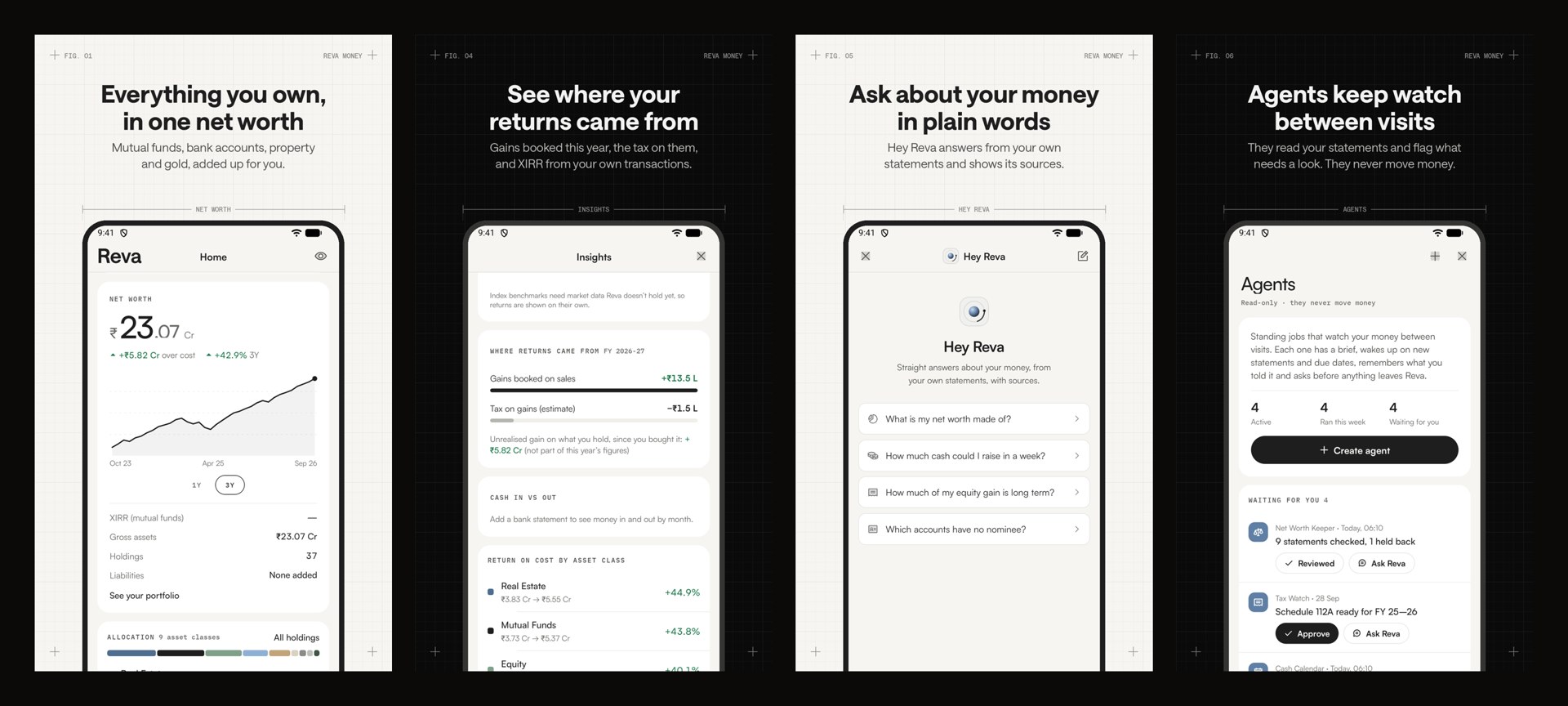
Reva adds up mutual funds, bank accounts, property, gold, EPF, PPF, NPS, crypto, cars and more into one net worth, built from statements the member adds.
I set one rule for every figure: it has to be printed on the member’s statement, published by AMFI, or arithmetic on those. When a figure is missing, Reva shows a dash and leaves it out of totals. It never fills in a typical value. Units times NAV must equal the printed value, and the sum of funds must equal the statement’s printed grand total to the paisa, or the statement is not posted.
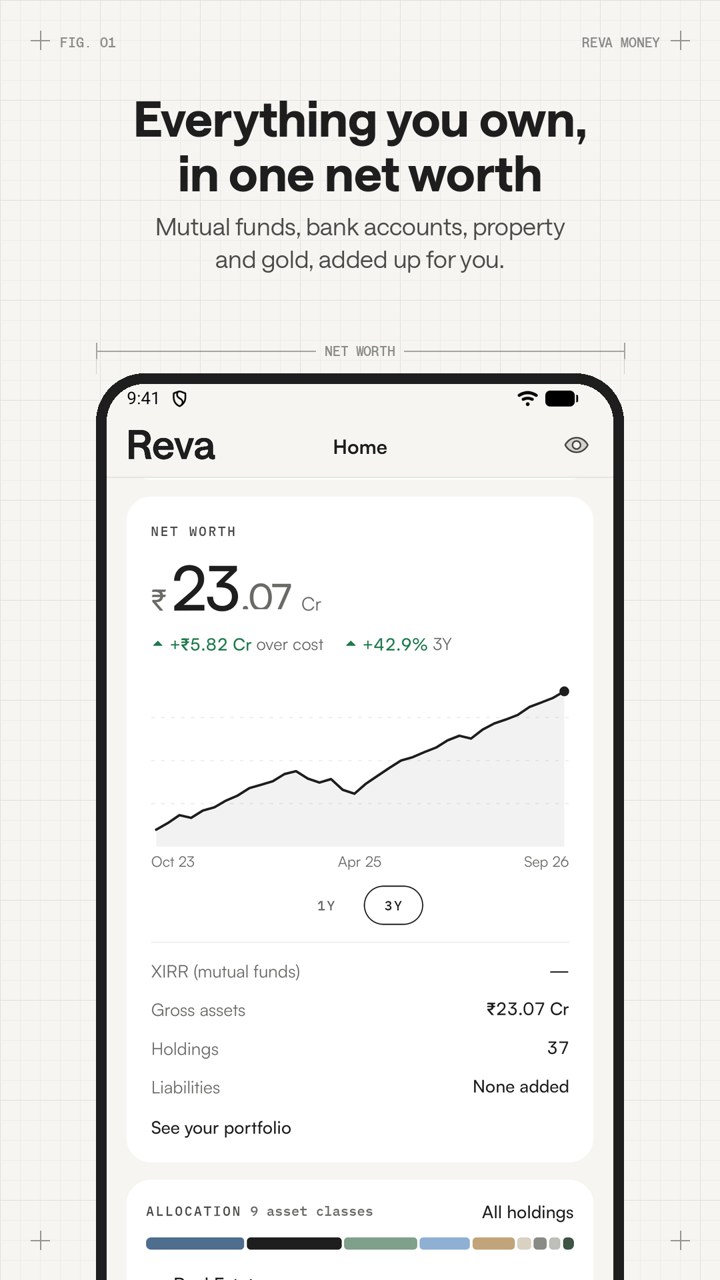
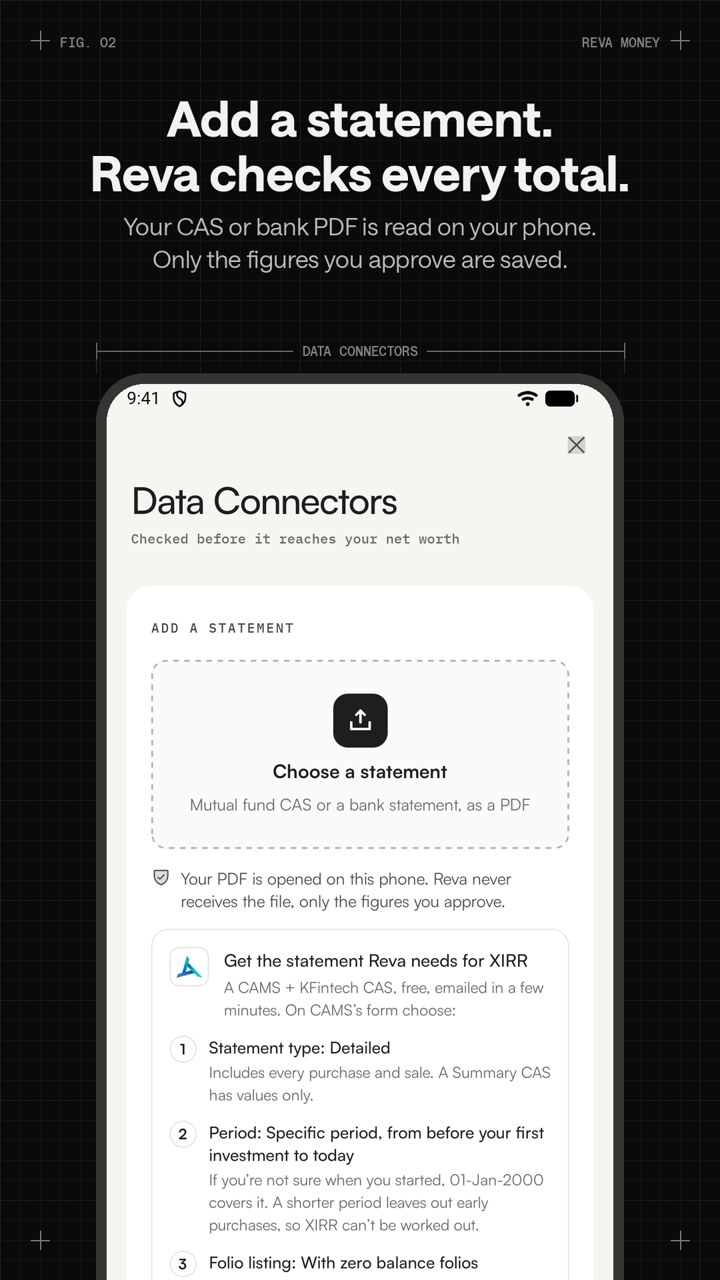
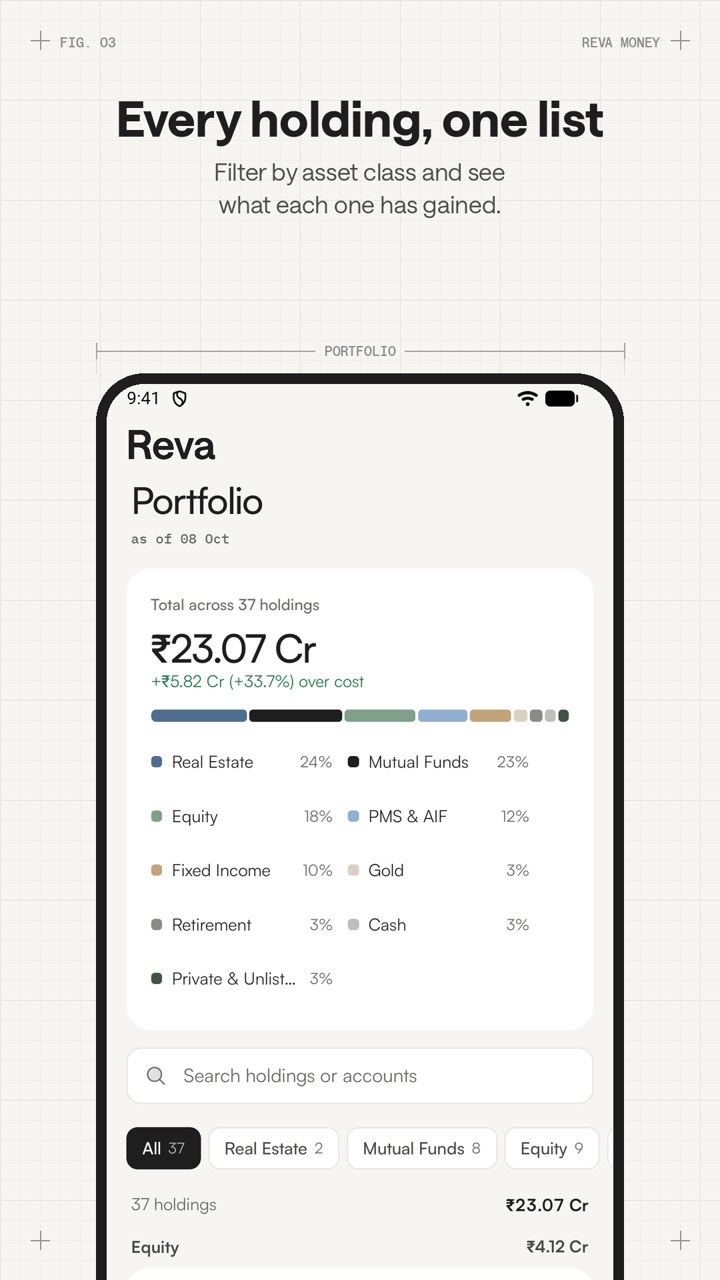
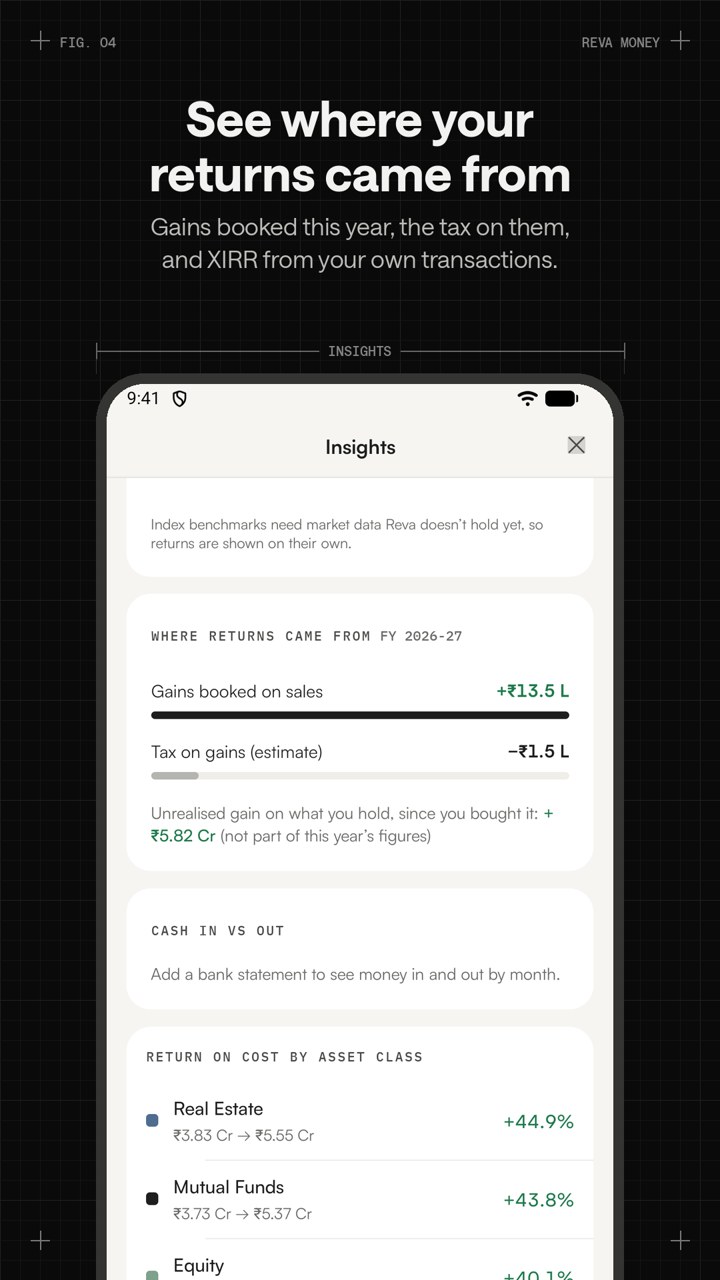
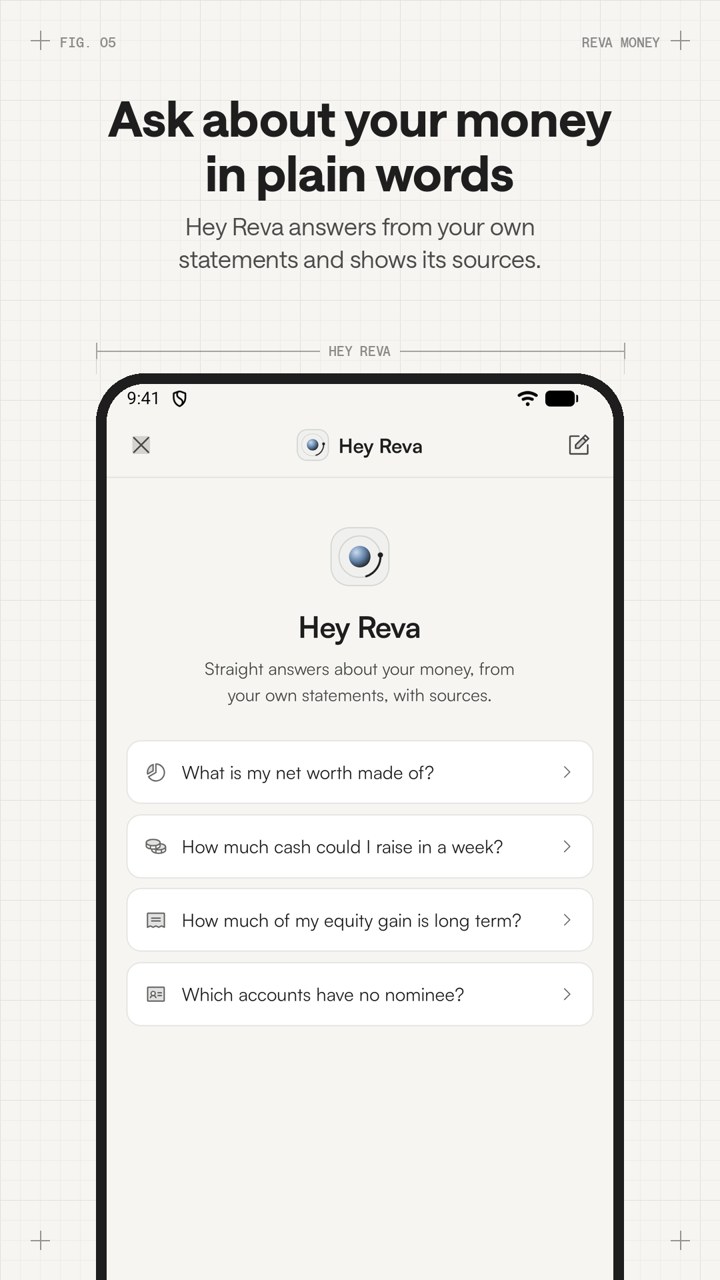
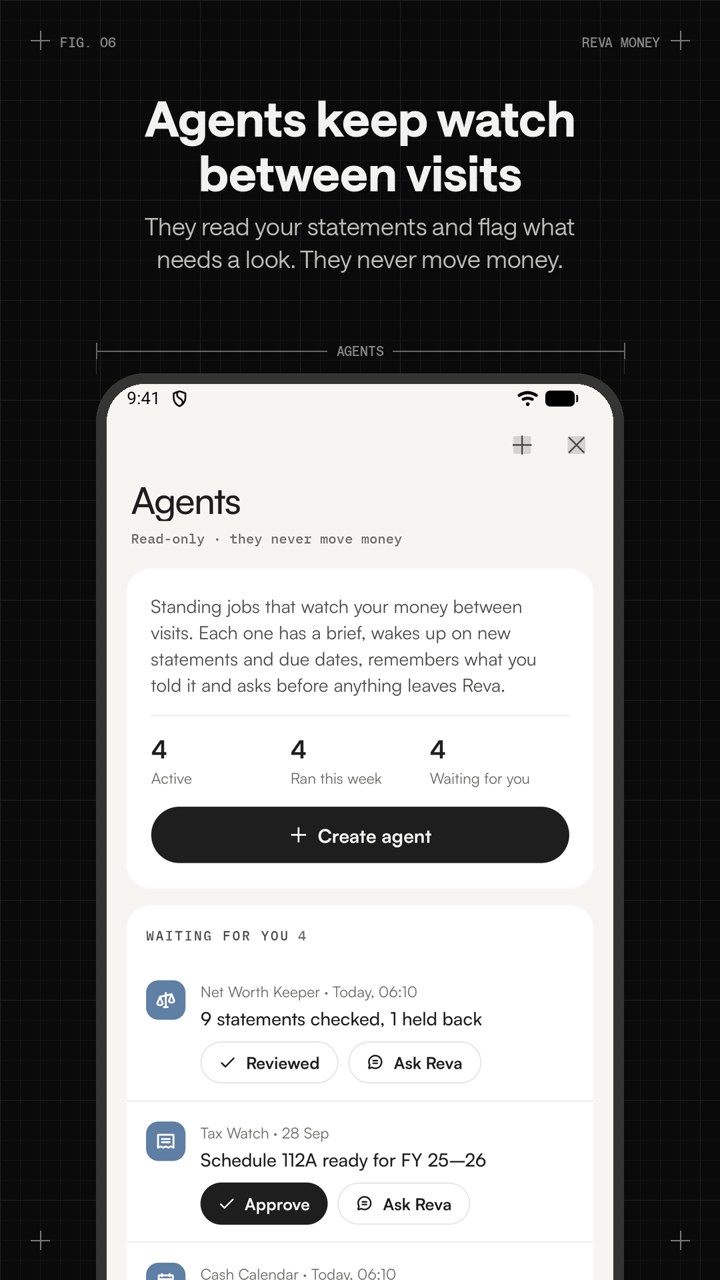
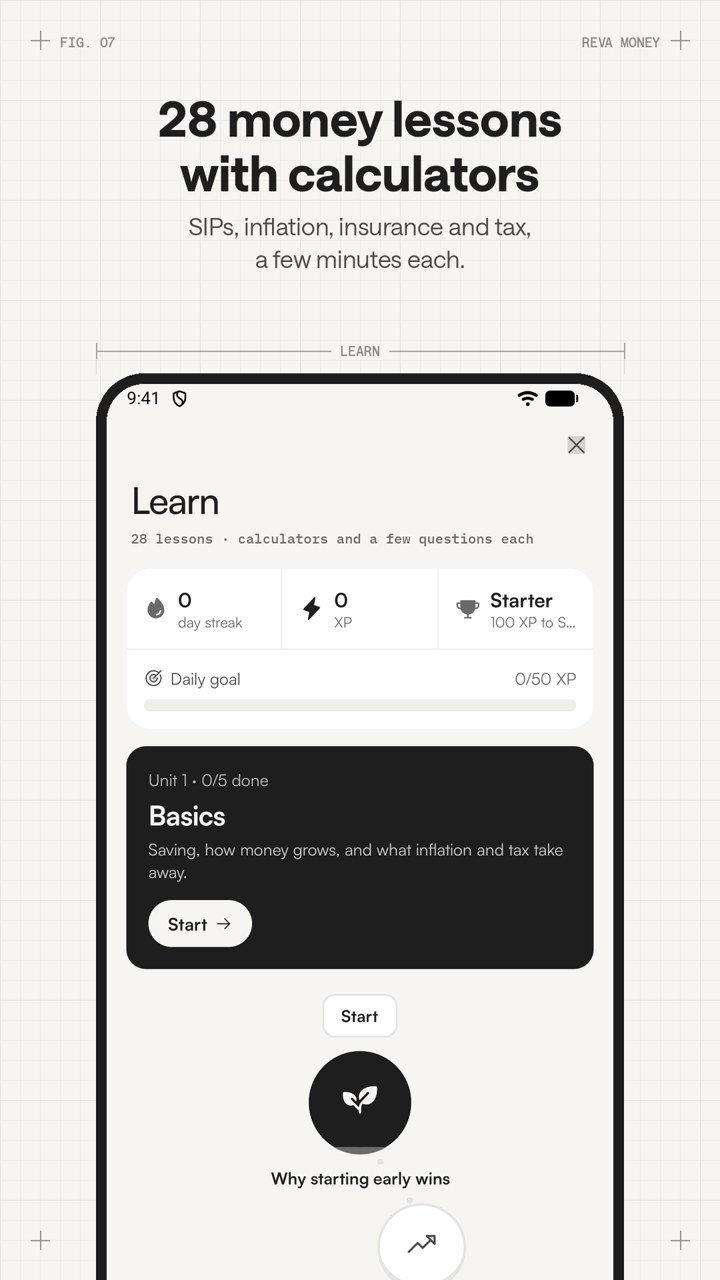
The Google Play set for 2.1.0, with sample data. Eight screens, one idea each.
Seven surfaces around one net worth.
- Data Connectors. Add a CAMS + KFintech CAS or a bank statement from 22 Indian banks. The PDF and its password stay on the device. Reva reads it there, checks every total, and saves only the figures the member approves. On the web it also reads Zerodha’s holdings XLSX. 18 asset types, from land to watches, can be added by hand with a note on how to value each.
- Insights. Mutual fund XIRR from the member’s own transactions, where this year’s returns came from, fund costs from AMFI’s published expense ratios (commission is the regular plan’s ratio minus the direct plan’s), and a stress test. Capital gains statements and a Schedule 112A draft are ready for a CA.
- Hey Reva. Ask about your money in plain words. Answers come from your own statements through read-only tools, and any answer with a rupee figure or a percentage carries its source.
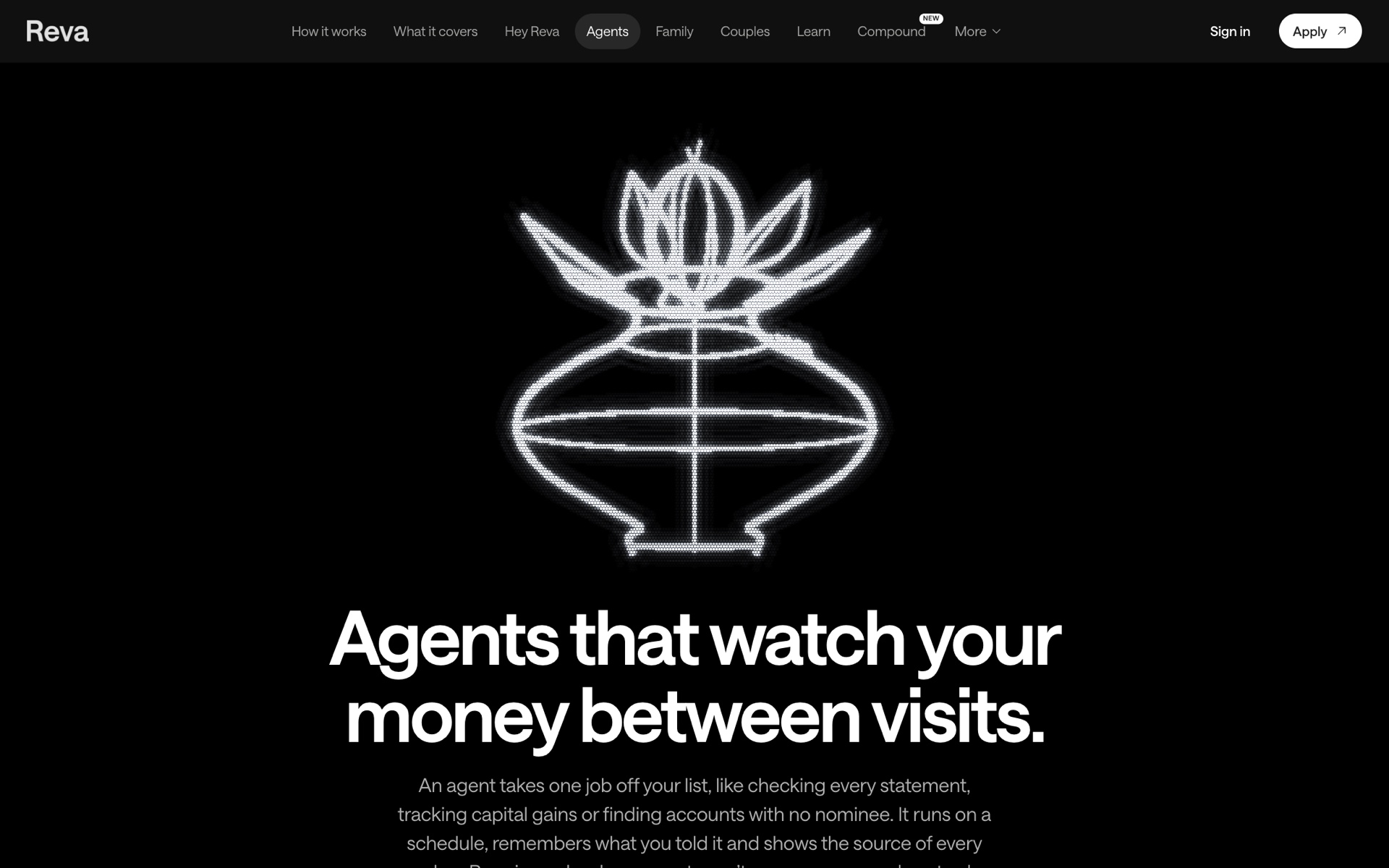
- Agents. Standing jobs that watch your money between visits: they wake on a new statement or a due date, remember what you told them, and wait for approval before anything leaves Reva. They are read-only and never move money or place trades.
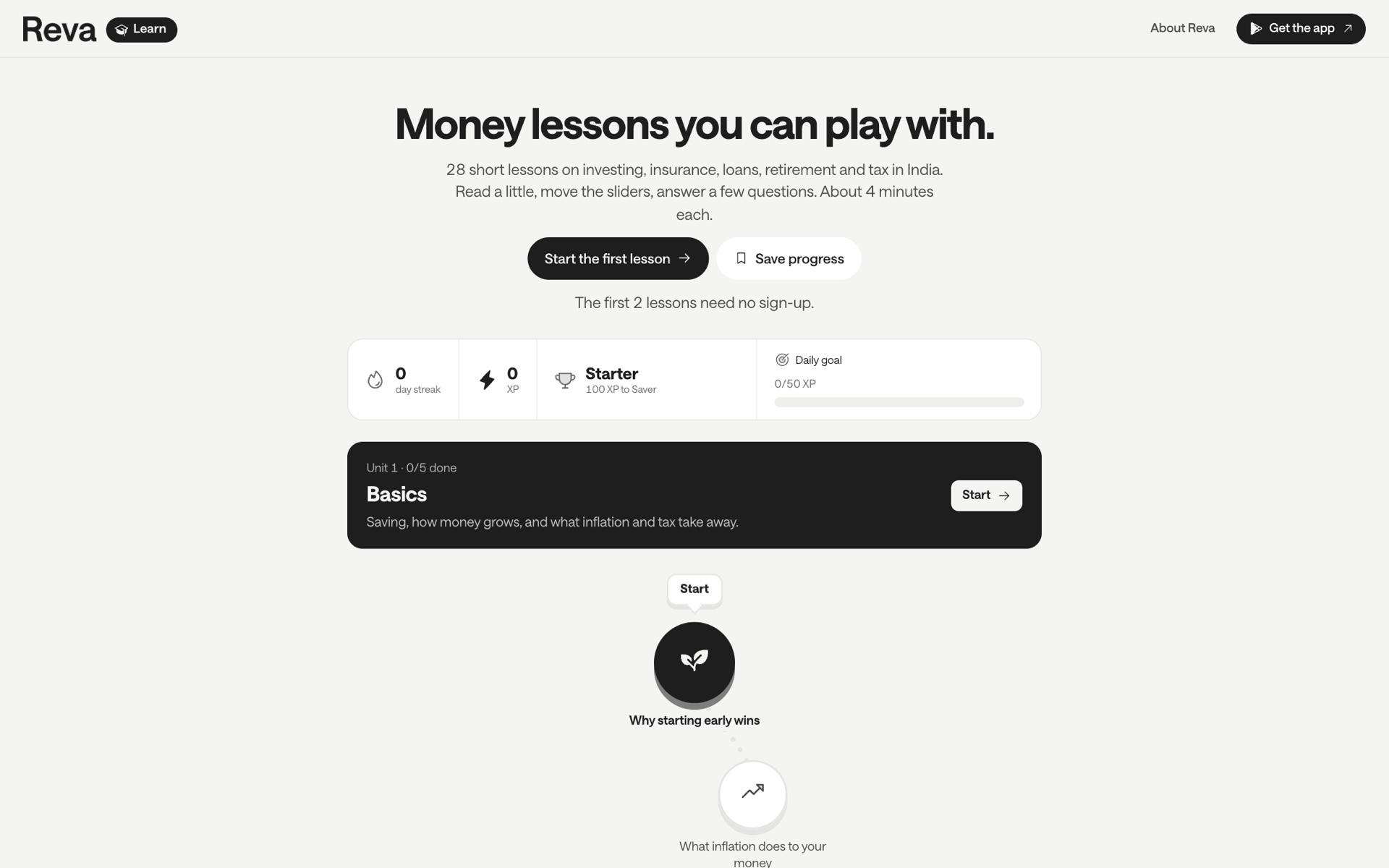
- Learn. 28 lessons in 6 units, each with a calculator and a short quiz, plus XP, streaks and a daily goal. Progress syncs between phone and web. The first two lessons are free at revamoney.xyz/learn with no sign-in.
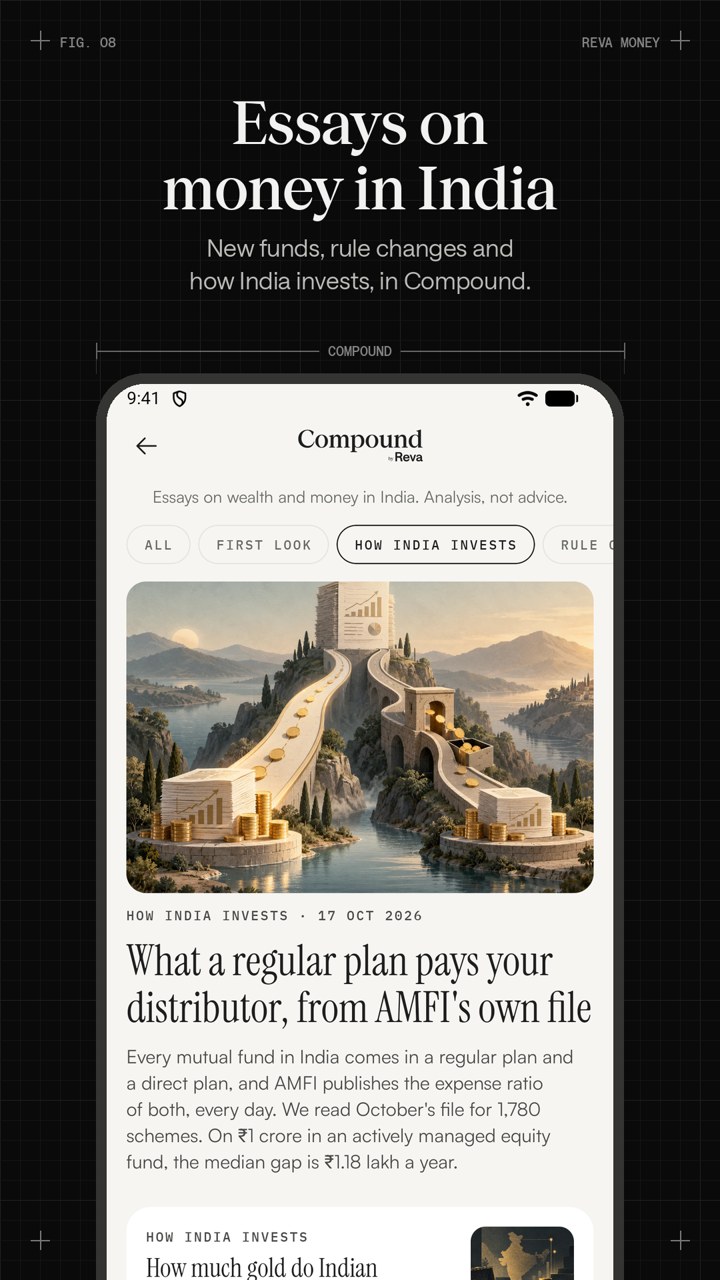
- Compound. Reva’s publication at revamoney.xyz/compound, in four columns: First Look, How India Invests, Rule Changes and Building Reva. Every number in a piece names its source. Pages render on request, so a published piece is live in about 10 seconds, and the Android app shows the same articles.
- Family access. Invite a partner, a family member, a CA or an advisor, each with a role. Family members get a read-only view of net worth and holdings with no bank transactions. A CA gets exports: a Schedule AL draft, holdings, interest income and Tally XML vouchers.
The same Reva, at desk size.
The web app at revamoney.xyz/web runs on the same database as the phone. A left rail holds Home, Portfolio, Insights, Goals, Agents, Protect, and Learn; the search bar also takes questions; and on wide screens Hey Reva sits docked on the right. Every screen below uses the fictional sample household.
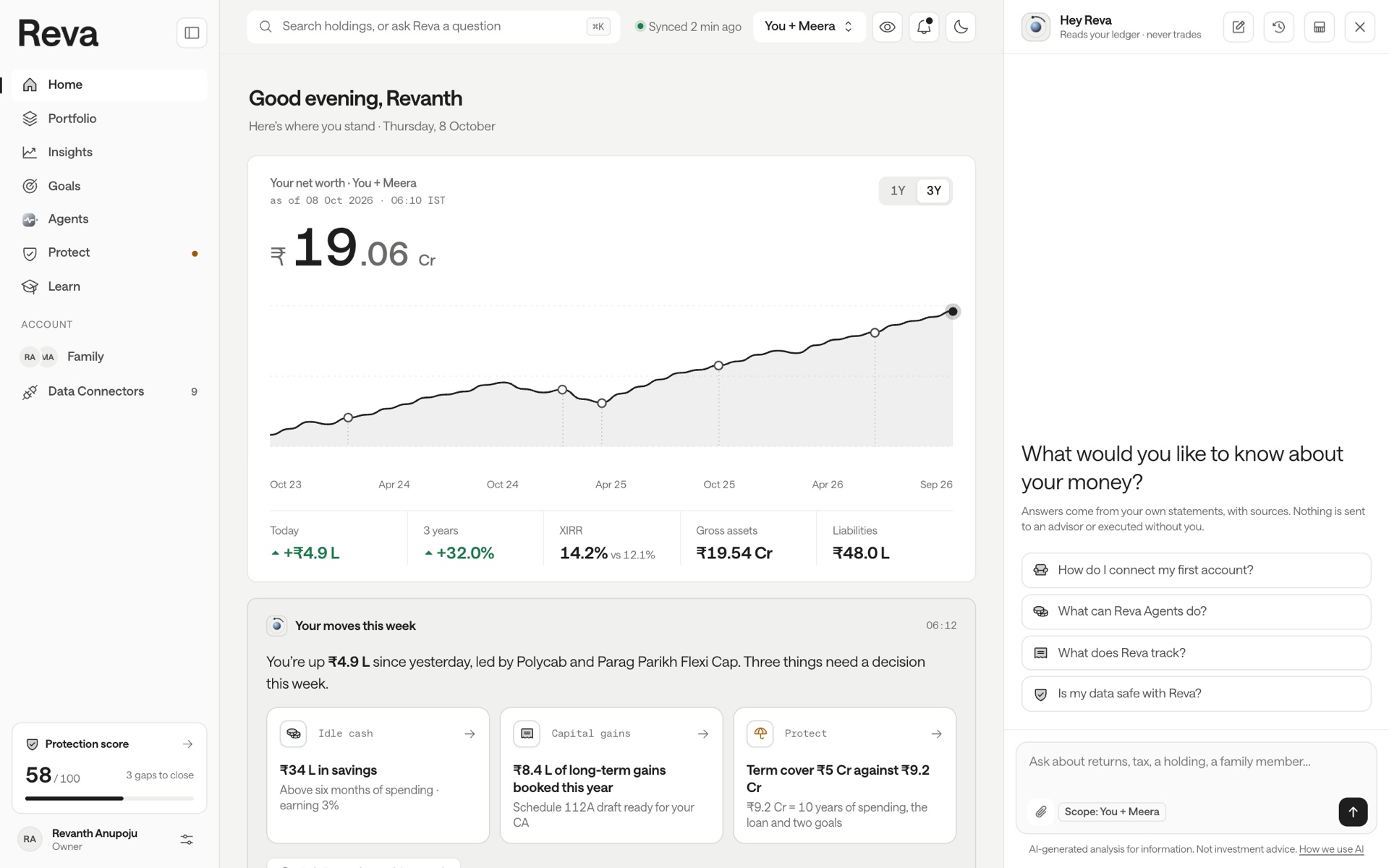
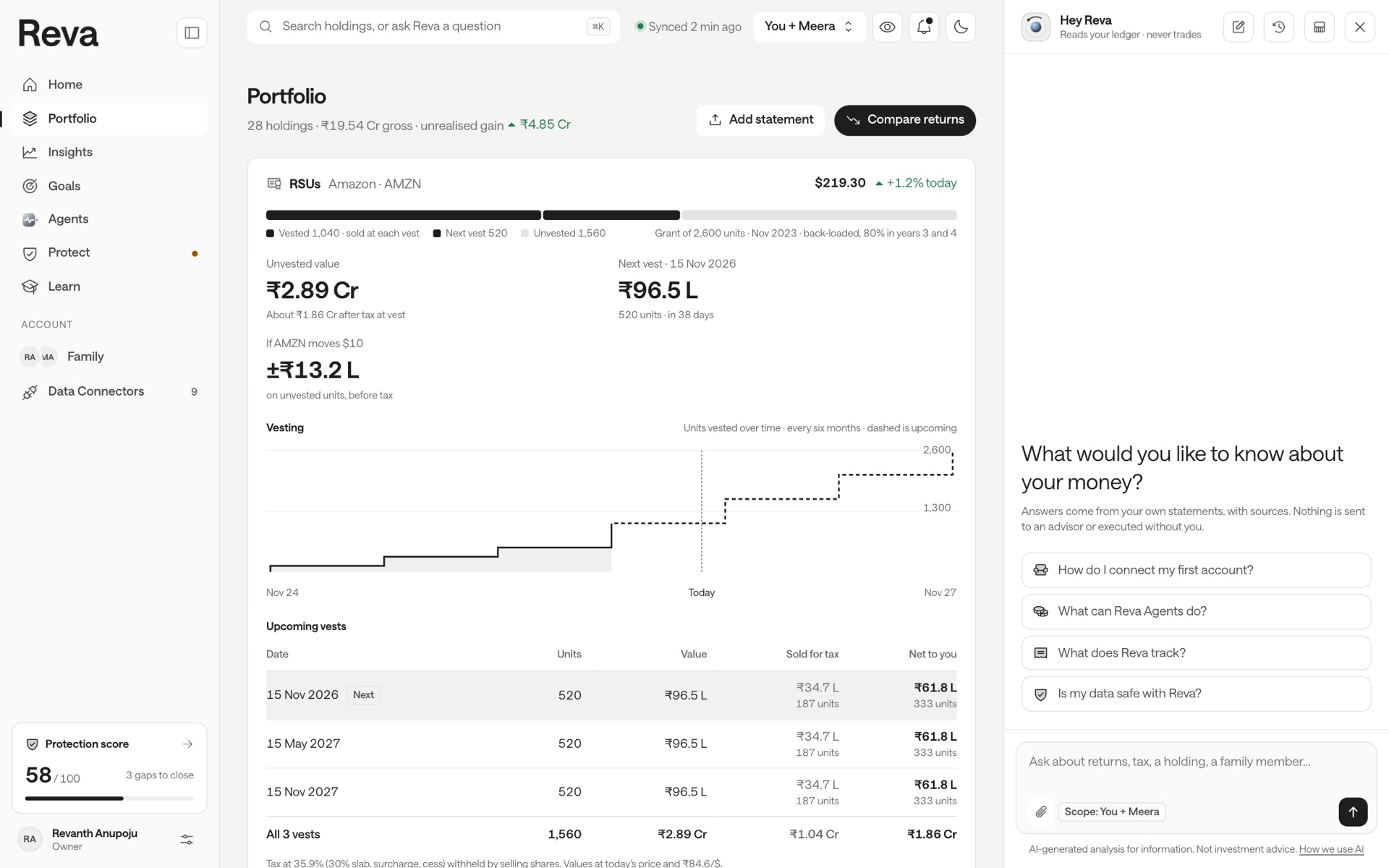
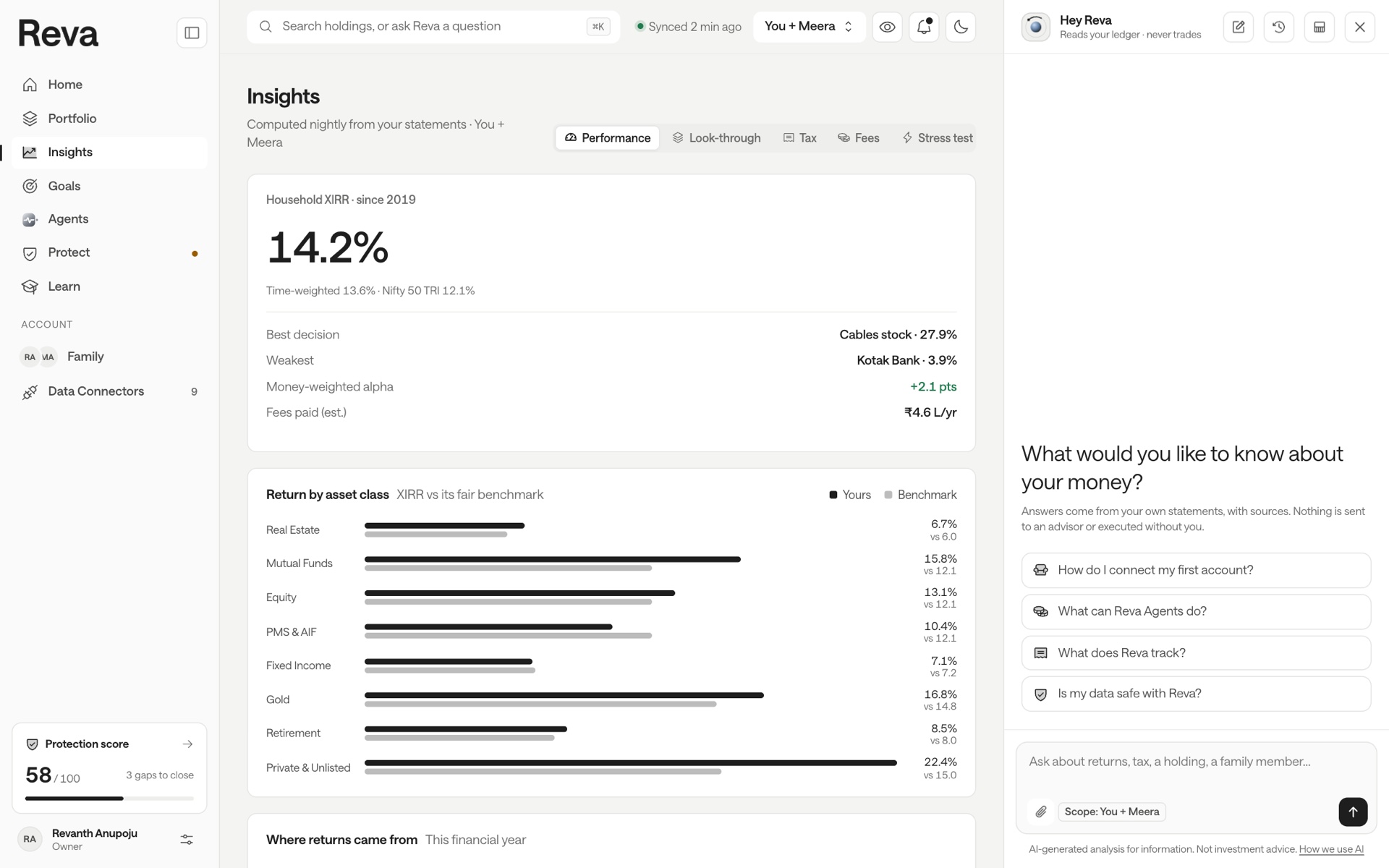
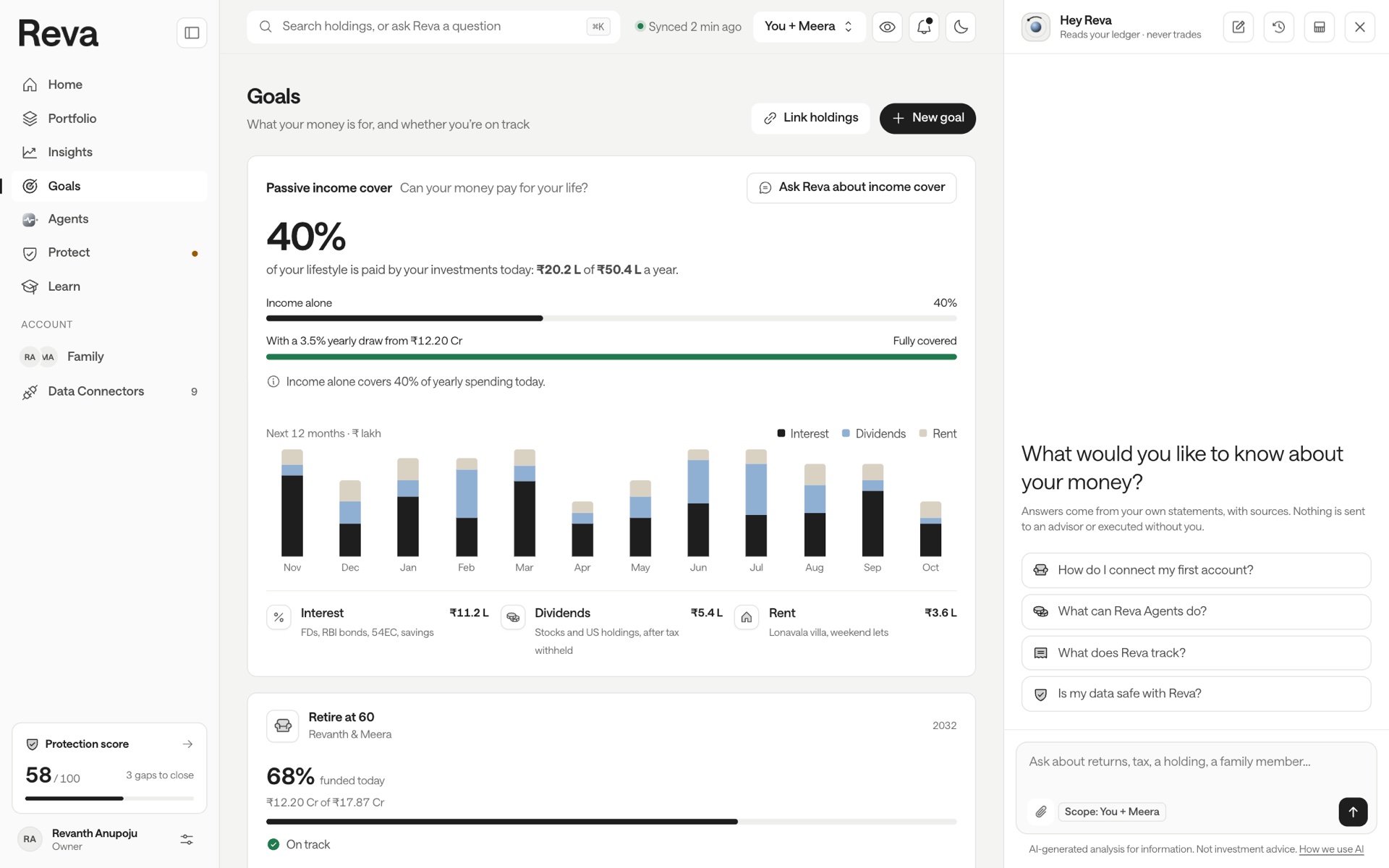
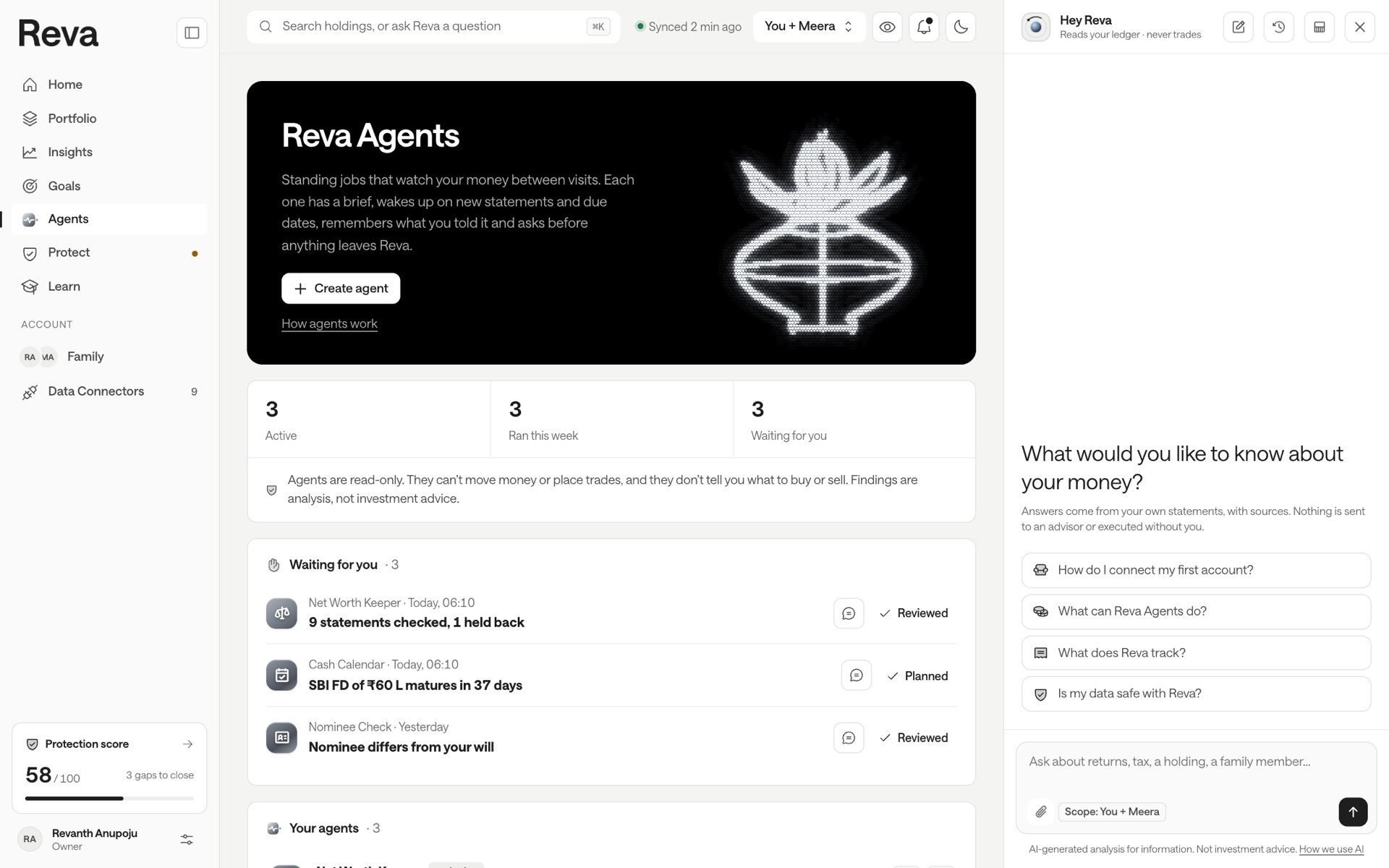
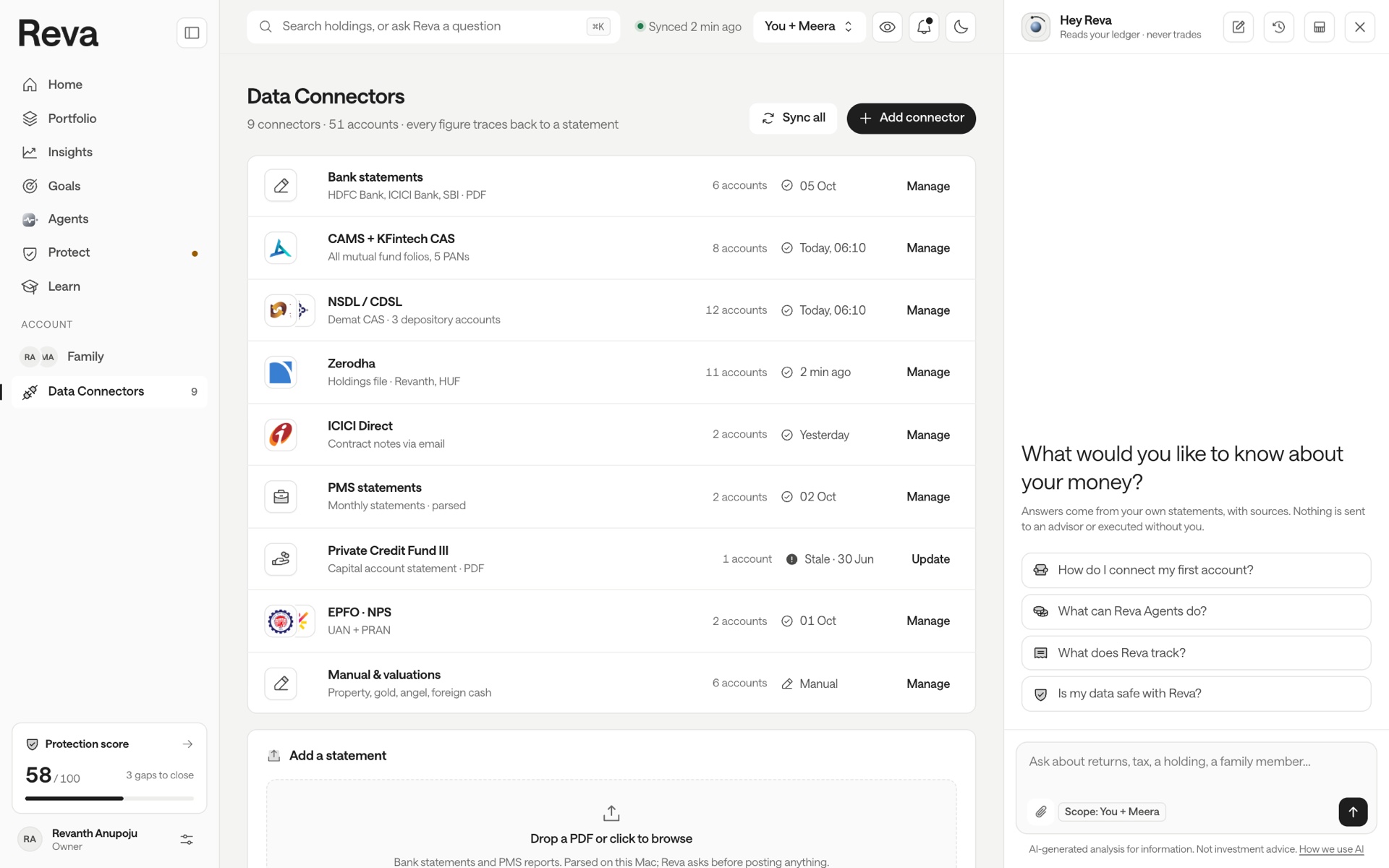
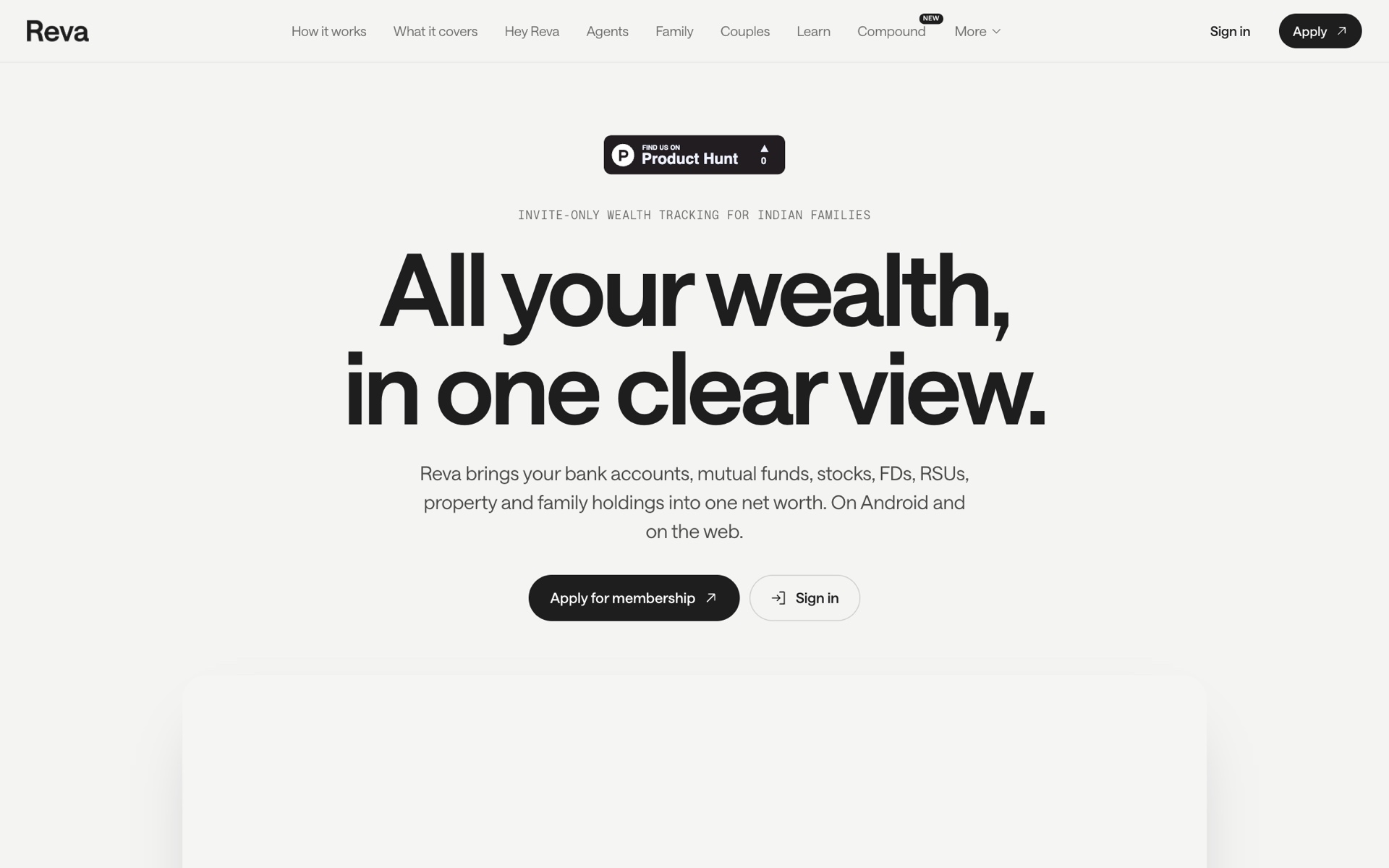
Around the app sit the public pages anyone can open without an invite: the landing page, Learn with its first two lessons free, and a page that explains the agents.
A publication that holds itself to the app's rule.
Reva explains money as much as it counts it, so in October 2026 I built Compound, Reva’s publication on wealth in India. It runs four columns: First Look takes apart new funds and products before anyone puts money in, How India Invests follows how households actually hold their money, Rule Changes explains what a Budget, SEBI, or RBI change means for an ordinary portfolio, and Building Reva covers the hard parts of building a wealth app in India.
The rules are the app’s rules: analysis, not advice; a source for every number; no invented interviews. Each piece opens with an “In short” answer and ends with reader questions, both marked up so search and answer engines can quote them.

I designed it as an editorial product: a black home page, off-white articles in a narrow serif column, uppercase sans labels, and cover art required before anything publishes. Pages render on request from the database, so a new piece or an edit is live in about ten seconds with no deploy. An admin editor handles drafts, live preview, covers, and publishing, and new subscribers get a welcome email with the latest pieces.

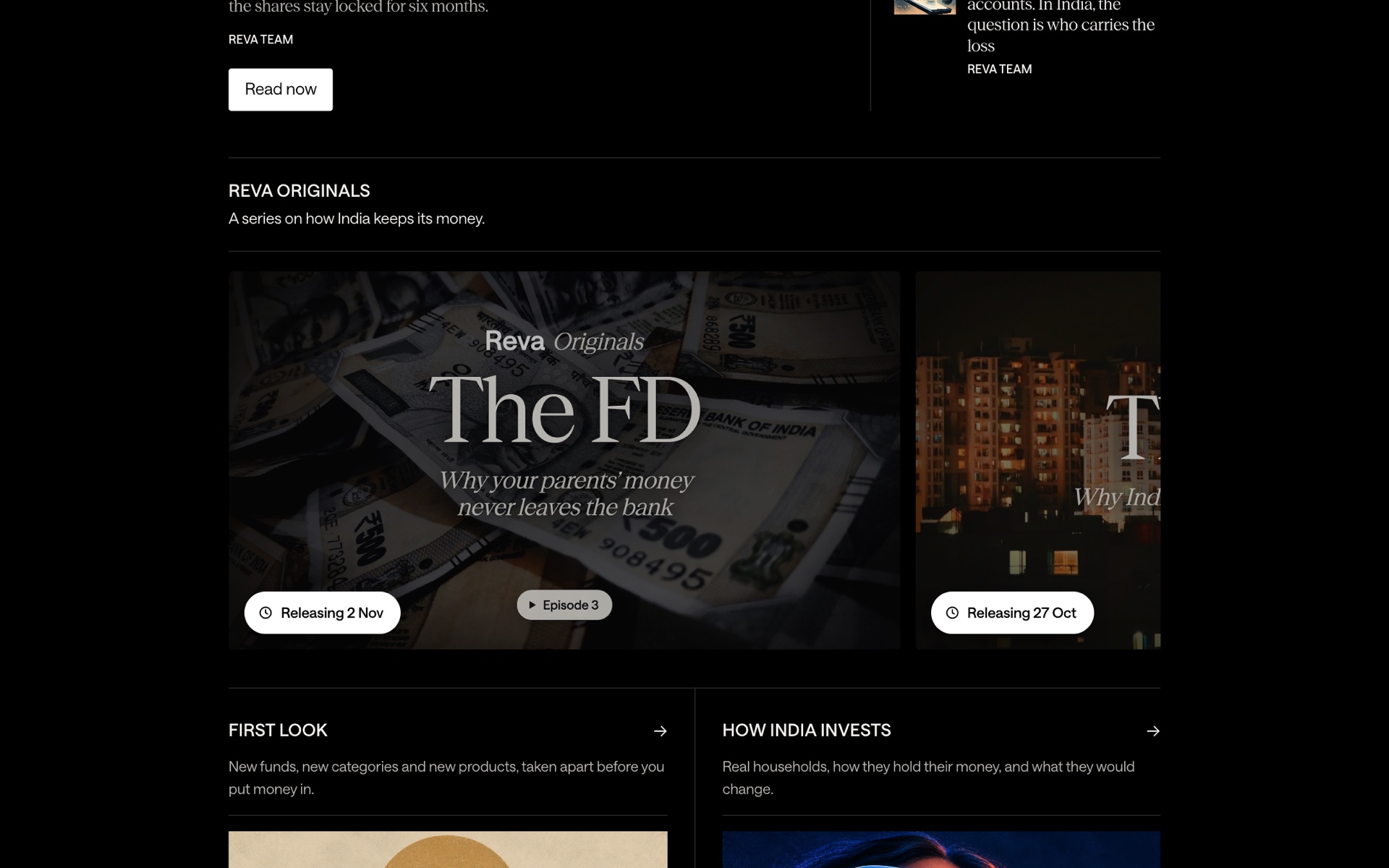
Two scheduled routines keep it current. Every morning one checks SEBI, RBI, AMFI, CBDT, MoSPI, PFRDA, and the depositories and adds what changed to the Today line. Another researches a topic from primary sources and writes a draft essay; I add the cover and decide whether it publishes. The Compound home also carries Reva Originals, the film series, with each episode card counting down to its release.
Consent, erasure, regulation and accessibility.
- DPDP consent and erasure. Members consent before anything is saved, and each household’s parsed data is encrypted with its own key (AES-256-GCM). A member can remove a single statement or delete their account and data from the app or the web.
- Tax planning switched off. SEBI treats tax planning that leads to investing as investment advice, so features that would turn tax into a suggested sale stay off until Reva is a SEBI-registered investment adviser. Capital gains statements and tax lessons stay on.
- WCAG 2.2 AA. Automated axe-core checks run across 54 views at desktop and phone widths, light and dark, including every onboarding step and the Android app’s five tabs.
- Sign-in and layout. Google sign-in or an emailed code, dark mode, and tablet and foldable layouts that hold content to a 720 dp column.
Short documentaries on how India handles money.
I also make Reva Originals, a documentary series on the money habits Indian families rarely explain out loud. Every figure on screen names its source (RBI, SEBI, AMFI, CBDT or the World Gold Council) and the date it was published. Episode 1, The Locker, is about why India keeps its wealth in gold. Episode 2, The Flat, on why India keeps its wealth in bricks, releases on October 27, 2026, and Episode 3, The FD, on why your parents’ money never leaves the bank, on November 2. The films also play on the Compound home page.
Launched on Product Hunt.
On October 23, 2026 I launched Reva on Product Hunt as “One net worth for everything you and your partner own,” under Android, Fintech, and Money. In the maker comment I asked the community which statement Reva should read next. NSDL and CDSL statements, PMS reports, and EPF passbooks are on the list.
Shipped on two platforms, still solo.
Reva 2.1.7 is on Google Play with 100+ downloads, and the web app is at revamoney.xyz/web. Membership is invite-only for now. The screens here use a fictional sample household.
In a money app, trust is the product.
A household will only rely on Reva if every figure matches the statement on the table. So the rebuild puts a check, a source, or a refusal behind every number, and shows a dash rather than a guess.
Building solo forced a discipline that is harder to keep on a larger team. There was no room for speculative features. Every surface had to keep the four rules above, and anything that needed a guess, a login to someone else’s bank, or a product to sell did not ship.