FusionX
BRENMAN's learning and editorial platform for engineers in construction and infrastructure. I designed and built it end to end with Claude Code. The first version went live in 20 days in March 2026, and it has since grown into two paid programs, a publication with its own podcast, and the company's public website.
A consulting firm that wanted to teach what it knows.
Brenman Consulting works with EPC organisations on the management side of engineering: contracts, claims, planning, and delivery. Its programs are taught by practitioners who have run the projects and carried the risk, for engineers who are moving from doing the work to leading it.
To sell and teach those programs, BRENMAN needed more than a course host. It needed checkout in rupees with GST, video that can't be passed around as a link, assessments and certificates an employer can verify, and a place to publish the firm's thinking. All of it had to sit on one site with one login.
Ship the smallest real product, then grow it in public.
The first commit was an MVP with a landing page, auth, and profiles on March 1. Razorpay payments went in the next day. By March 13 the platform had enrolment, streaming, invoices, transactional email, user management, and a pre-launch audit for security and accessibility behind it.
From there the platform grew one release at a time: the Construction Management and Construction Law programs, bundles and track recommendations at checkout, the Bridging Room publication, a help centre, and a consulting site. Of 1,115 commits, 1,043 were written with Claude Code in the loop.
Real payments set the rules for how I worked with AI. Every database change goes to a development copy first and is verified against the live schema before it reaches production. Every new table gets row-level security, revoked default grants, and locked search paths. A function is never rewritten from memory; I pull the live definition first.
One site for learning, publishing, and the firm.
Below are the public surfaces, captured from the live site in October 2026. The learner dashboard, course player, and admin sit behind a login. Click any screen to open it full size.
The front doorWritten for one reader
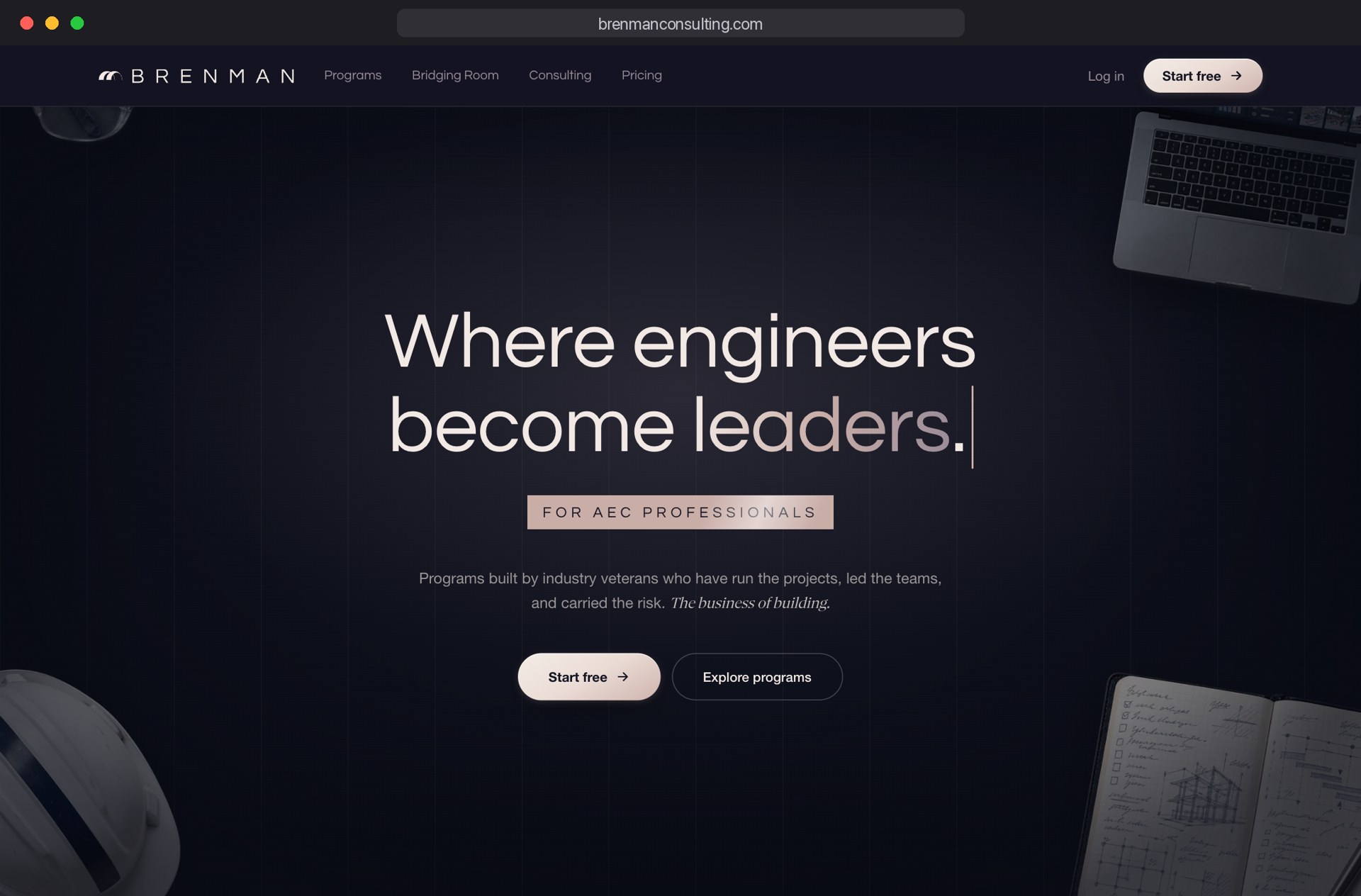
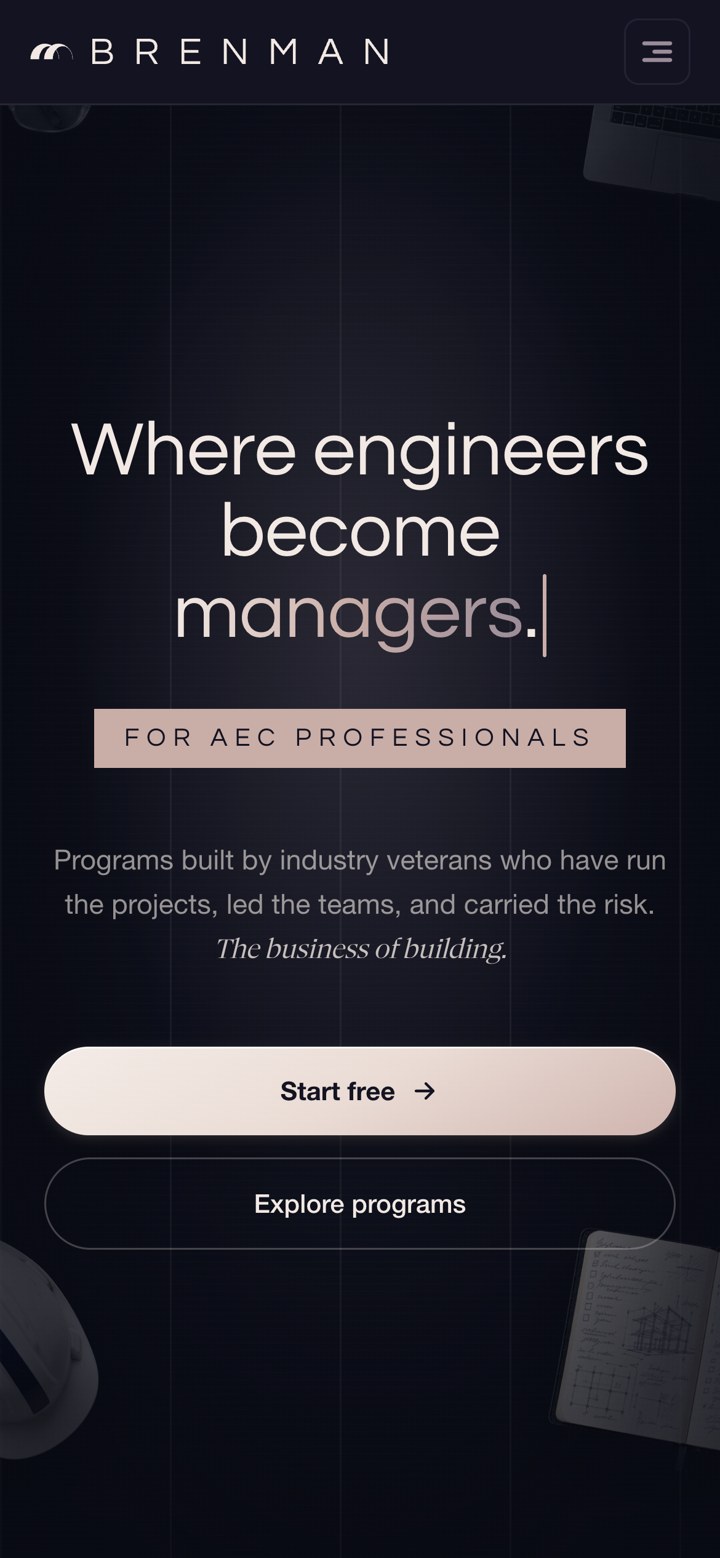
The home page speaks to an engineer who wants to manage. Two calls to action, start free or explore programs, and nothing else above the fold.
Three businesses, one platform
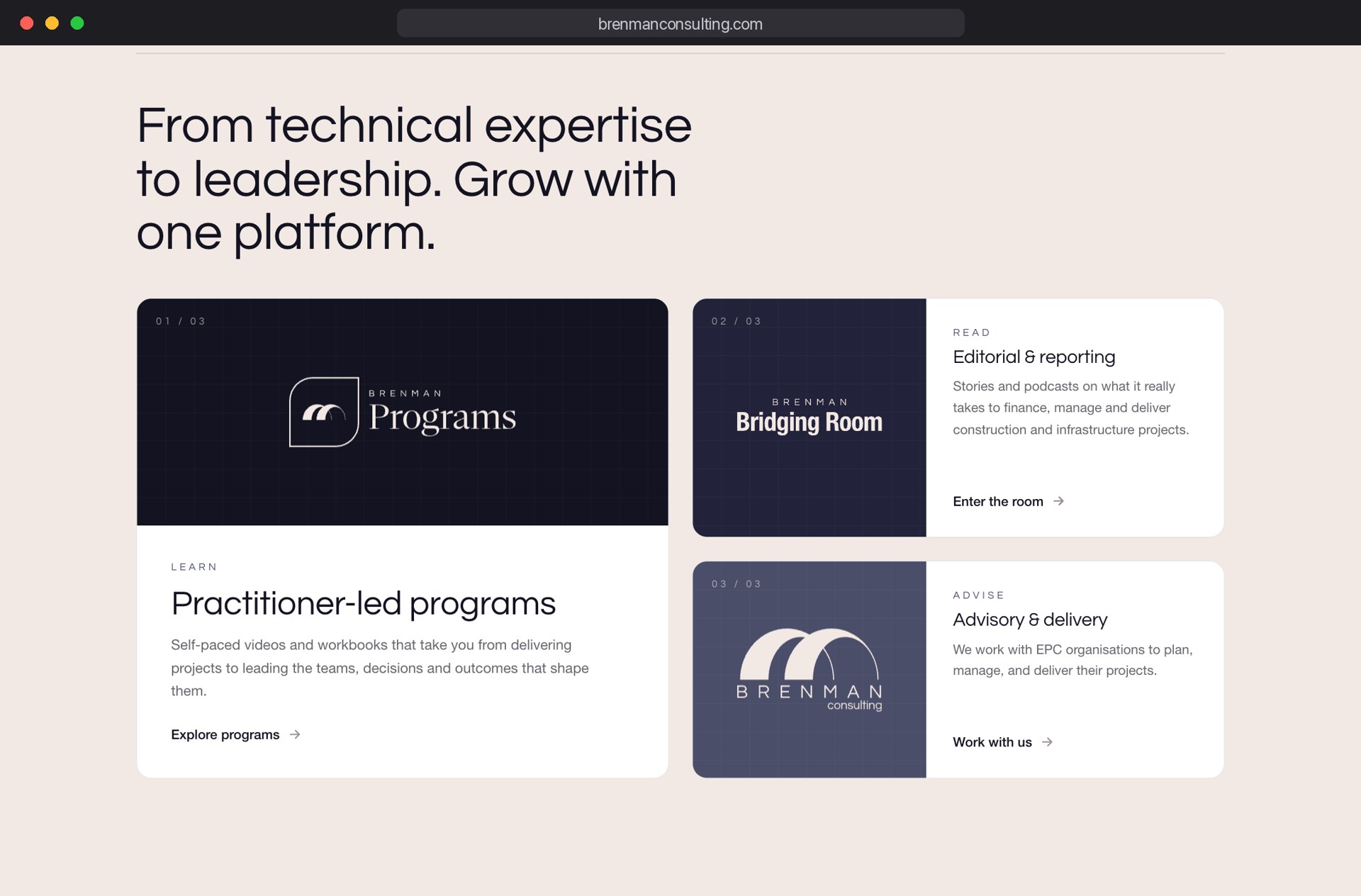
Programs, the Bridging Room publication, and the consulting practice each get a card and a door. A learner, a reader, and a client all land on the same site and share one account.
A catalogue led by the instructors
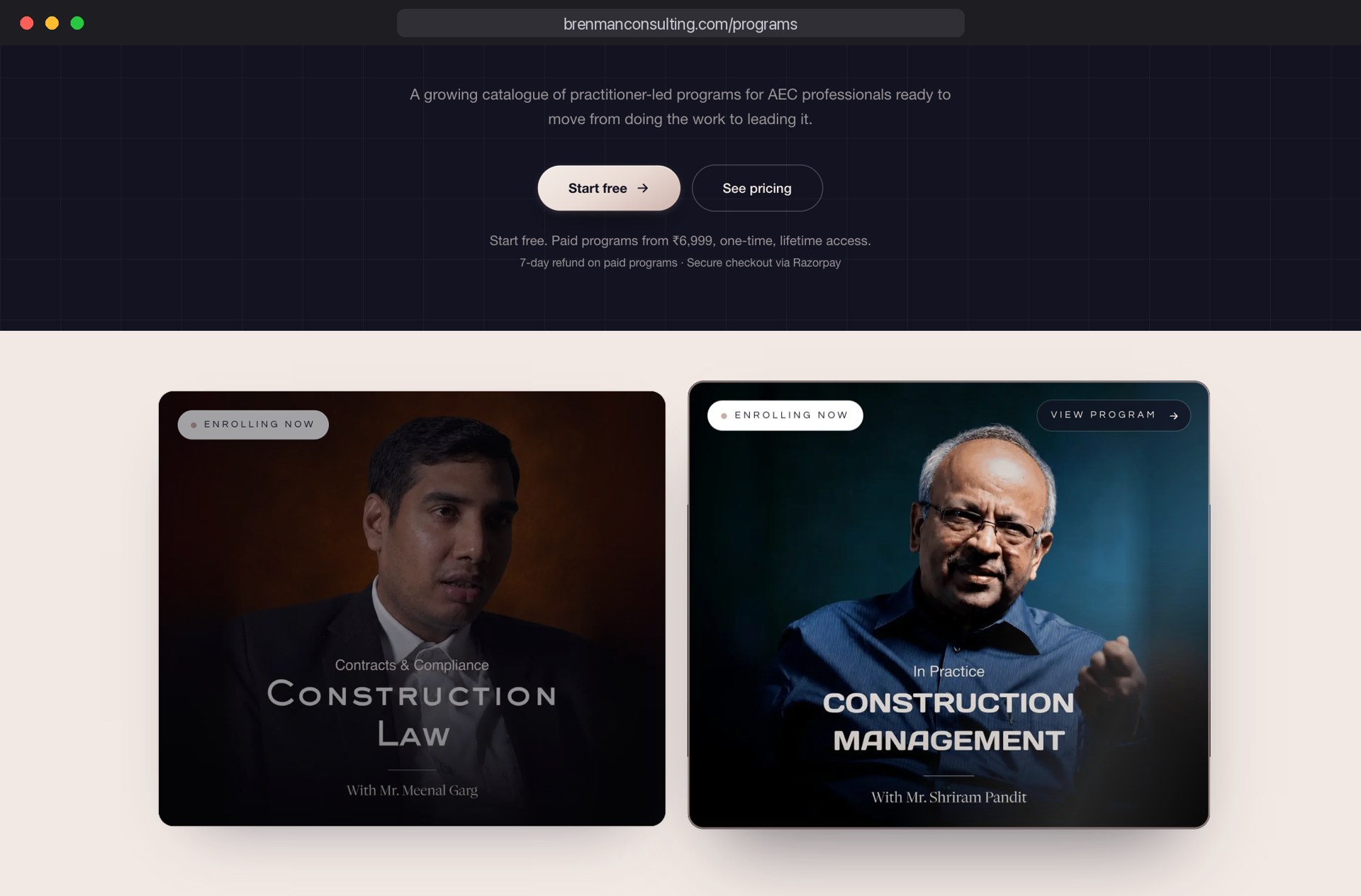
Every program starts free. Paid programs start at ₹6,999, one time, with lifetime access, a 7-day refund, and checkout through Razorpay. The instructor is the cover, because the reason to enrol is who is teaching.
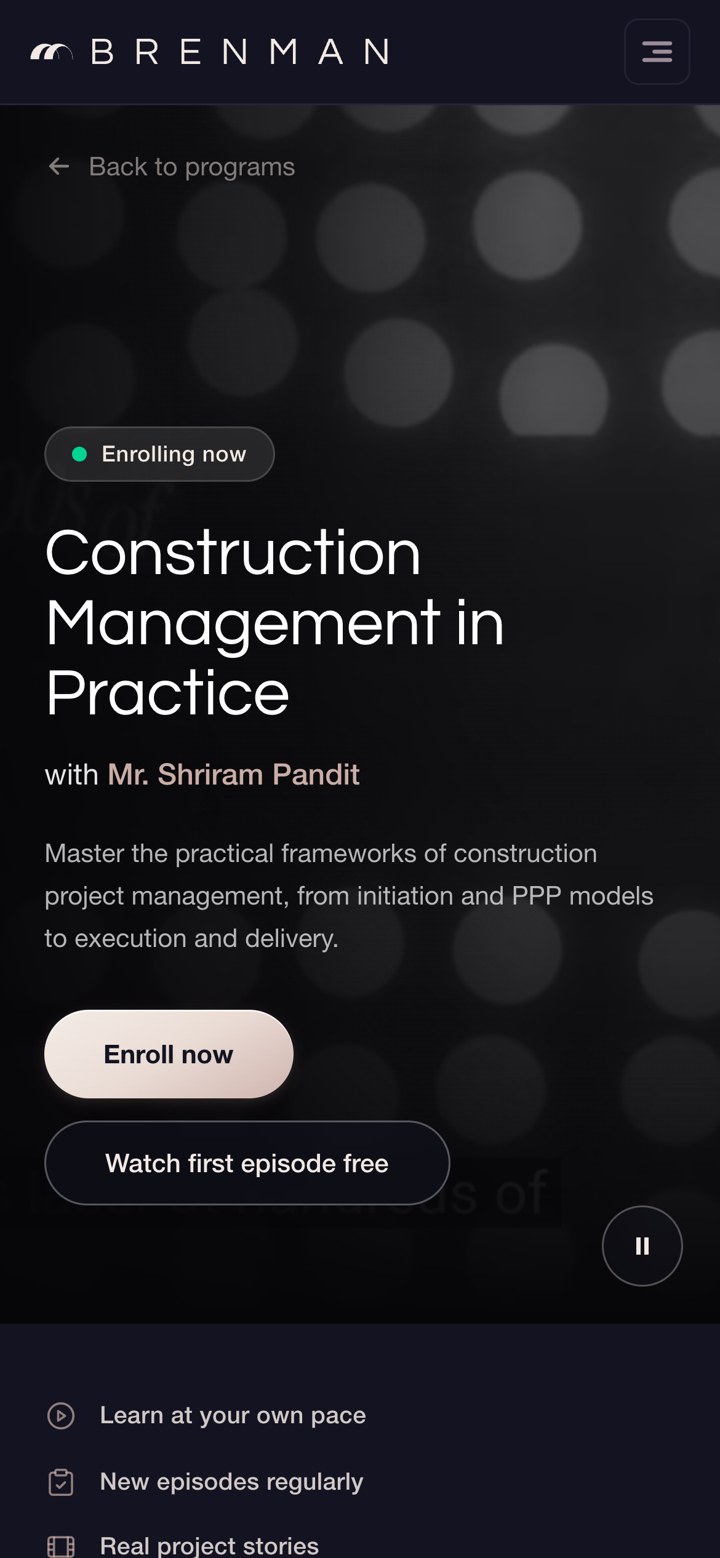
A program page that sells and teaches
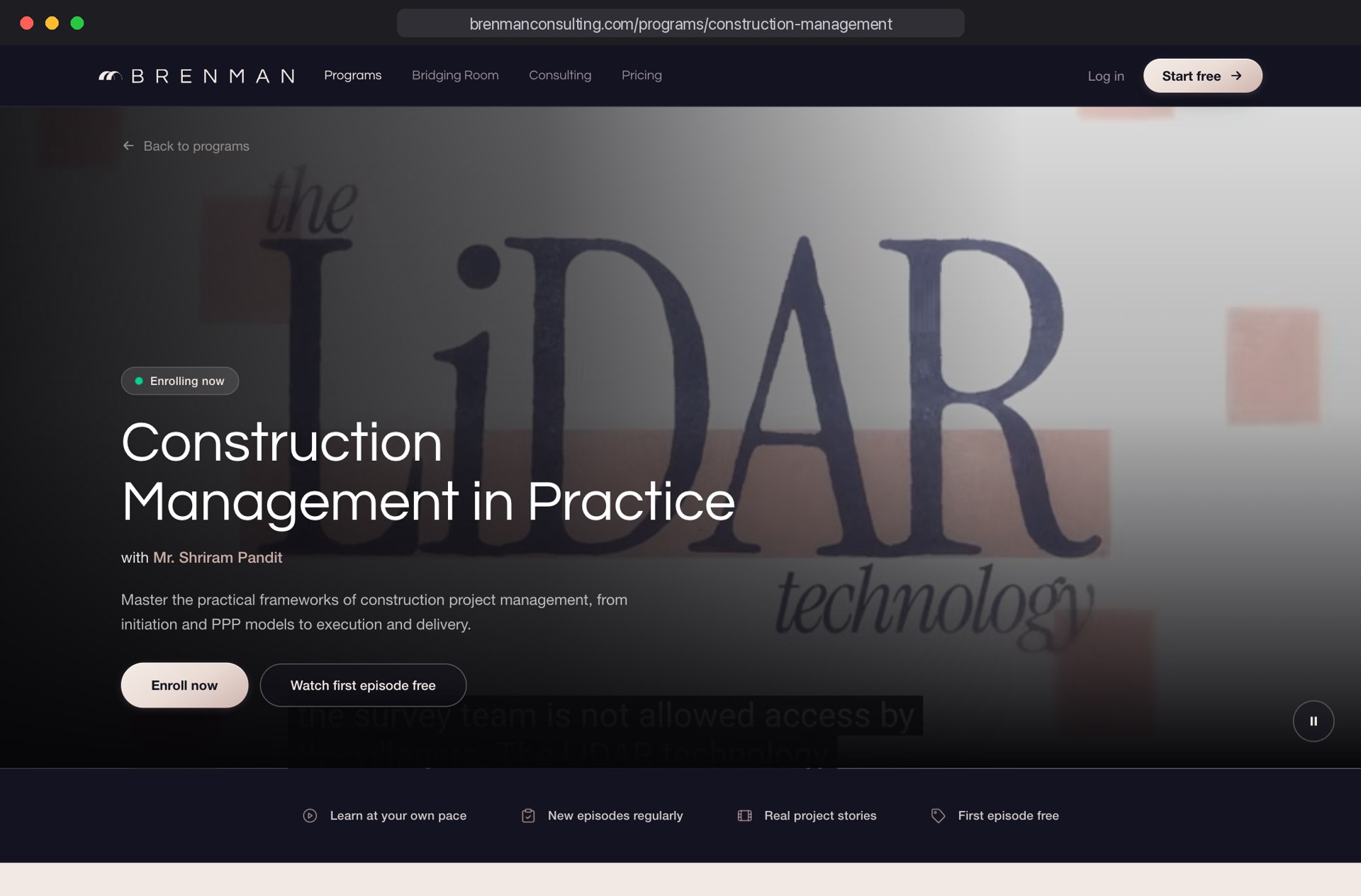
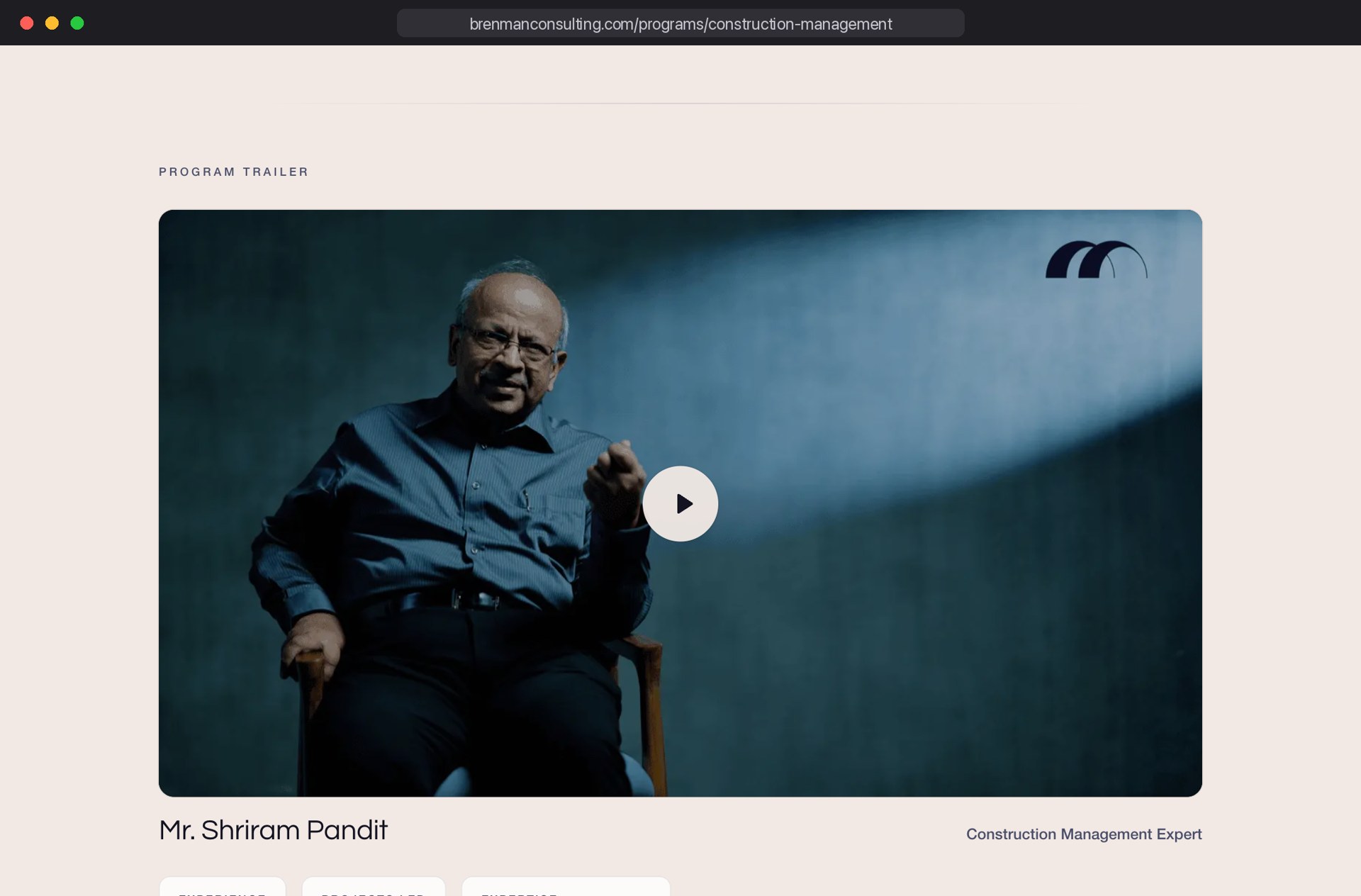
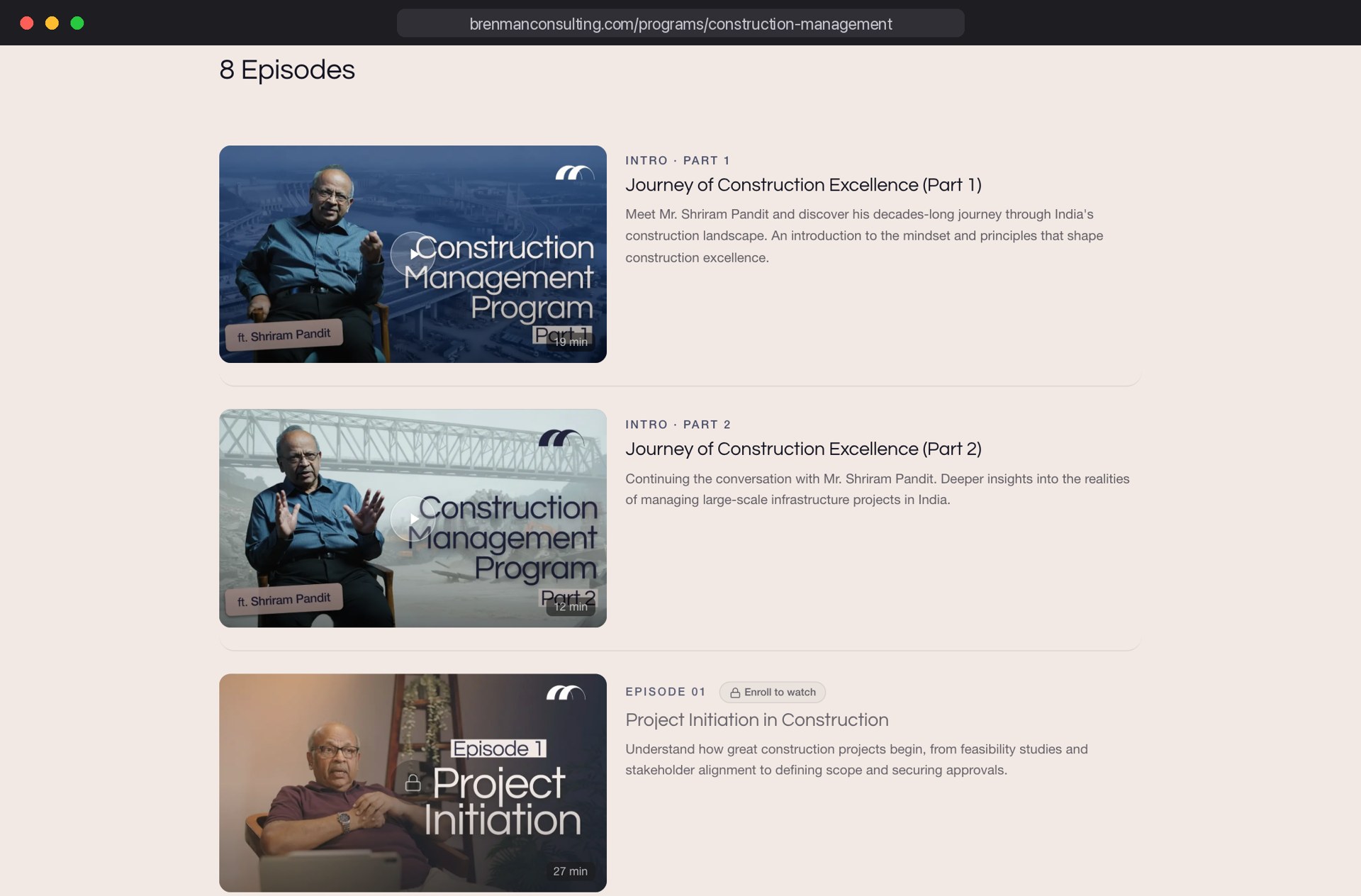
Construction Management in Practice opens on a video hero with two actions: enrol, or watch the first episode free. Below it come the four outcomes, the trailer, the instructor's record, and the full curriculum as episodes.
Two tracks for two jobs
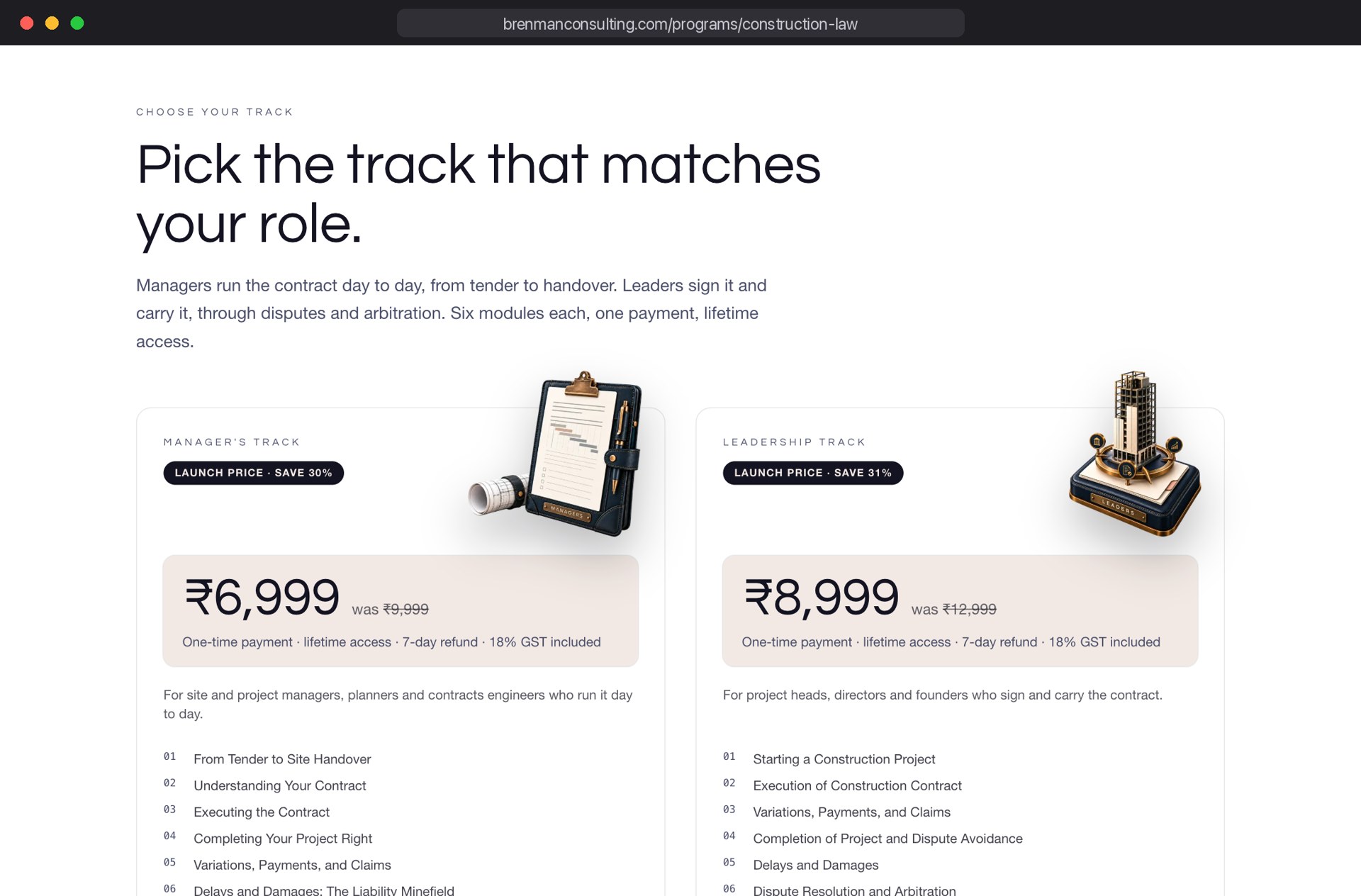
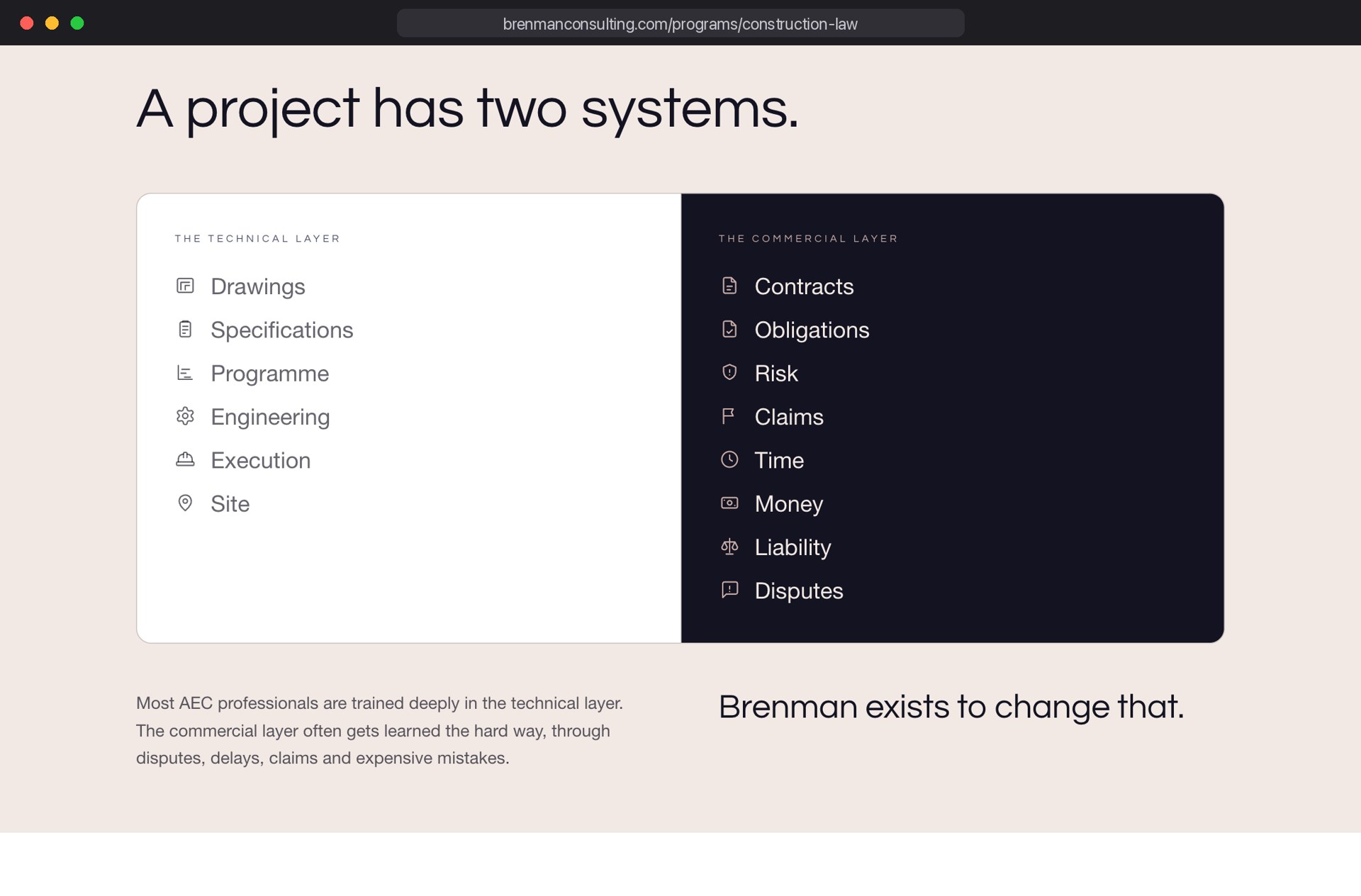
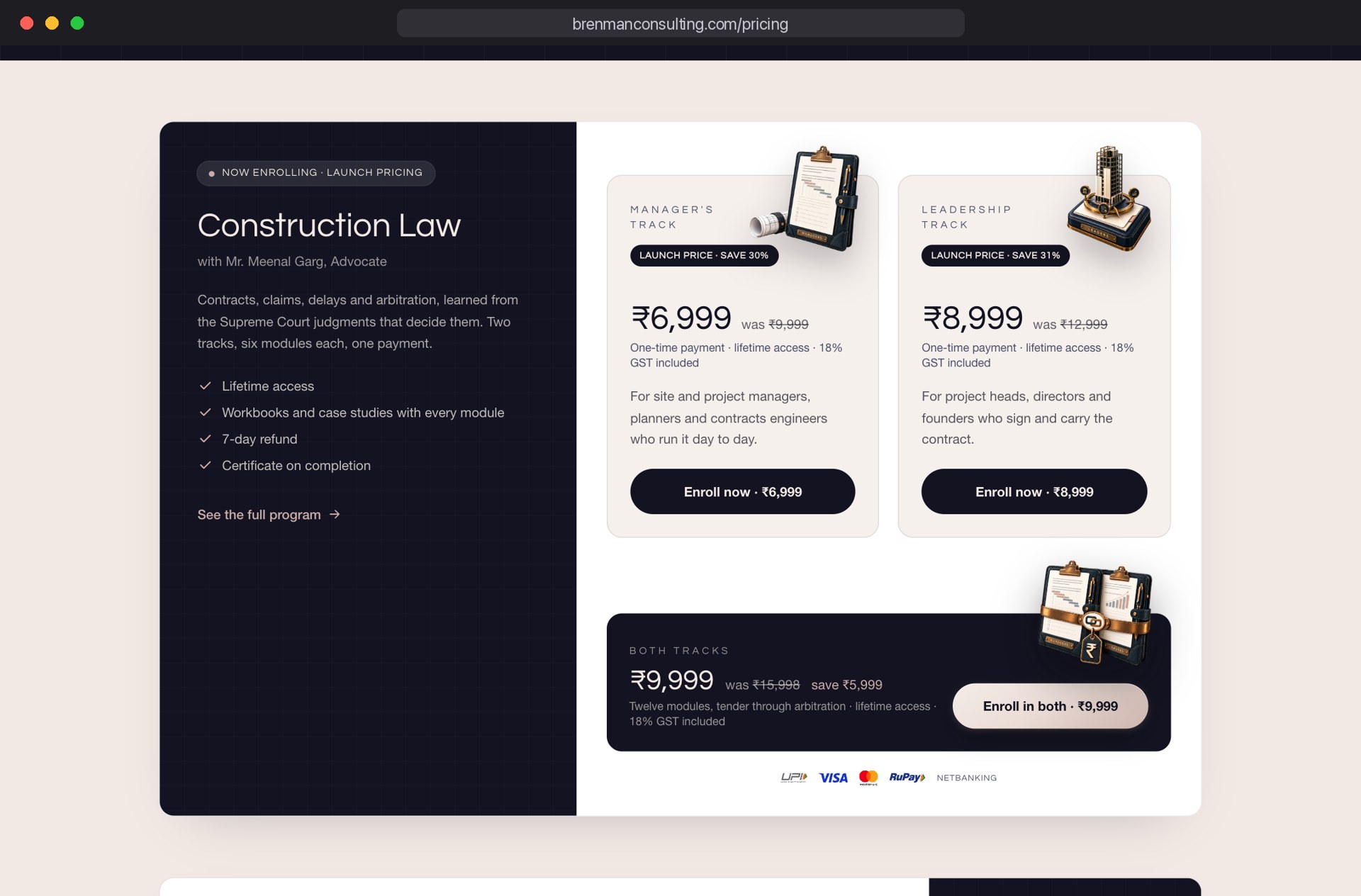
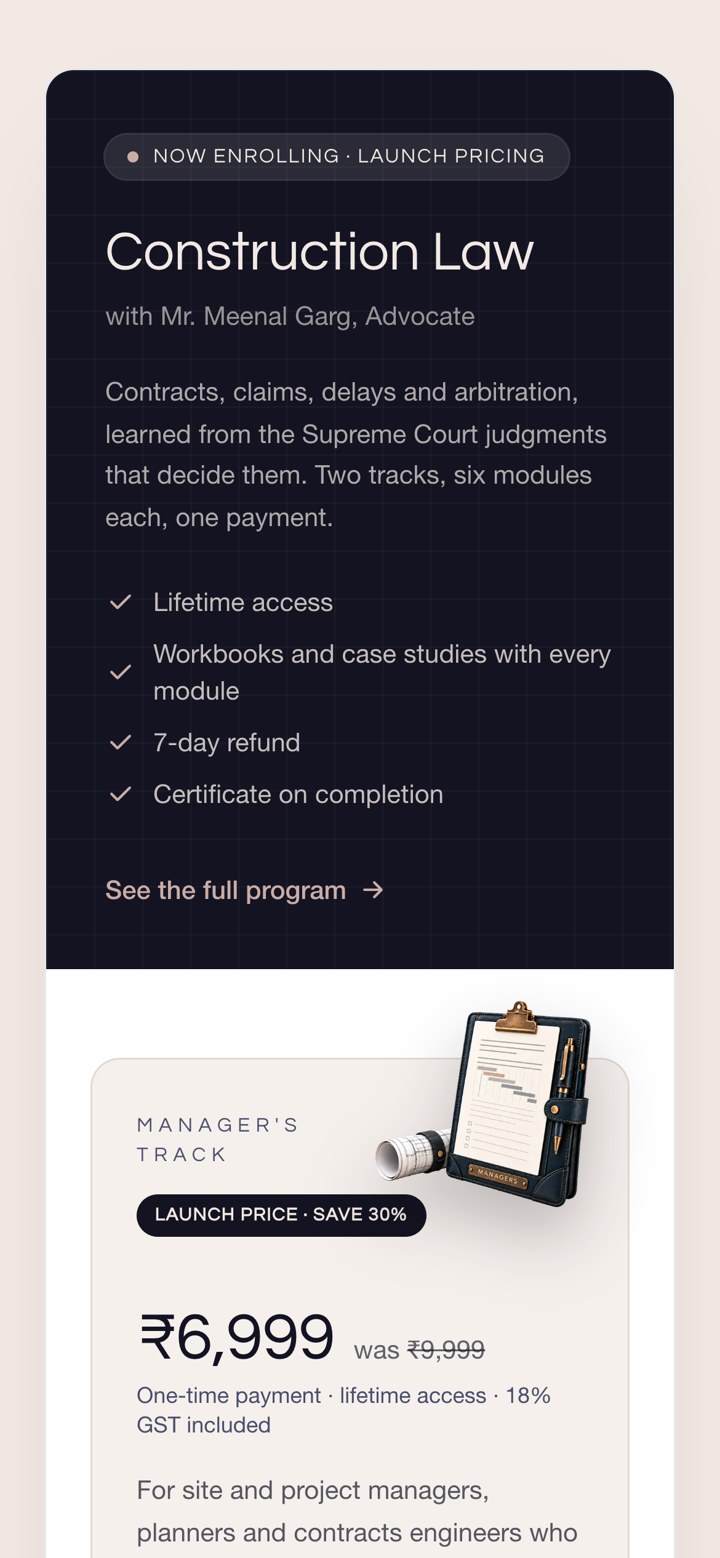
Construction Law is sold as a Manager's track for the people who run the contract day to day and a Leadership track for the people who sign it, each with six modules and one payment. The page teaches before it sells: a project has two systems, the technical one engineers know and the commercial one that decides disputes.
Pricing that matches how engineers buy
Start free, pay once, keep it for life. Prices include 18% GST, the two tracks can be bought together as a bundle, and the flagship program stays free.
Video that stays on the platform
Episodes stream through Bunny Stream with signed URLs and HLS playback, and a viewing heartbeat marks an episode complete at 90% watched. Learners get progress, billing, and certificates in one dashboard, and every certificate has a public verification page an employer can check.
Bridging Room, the publication
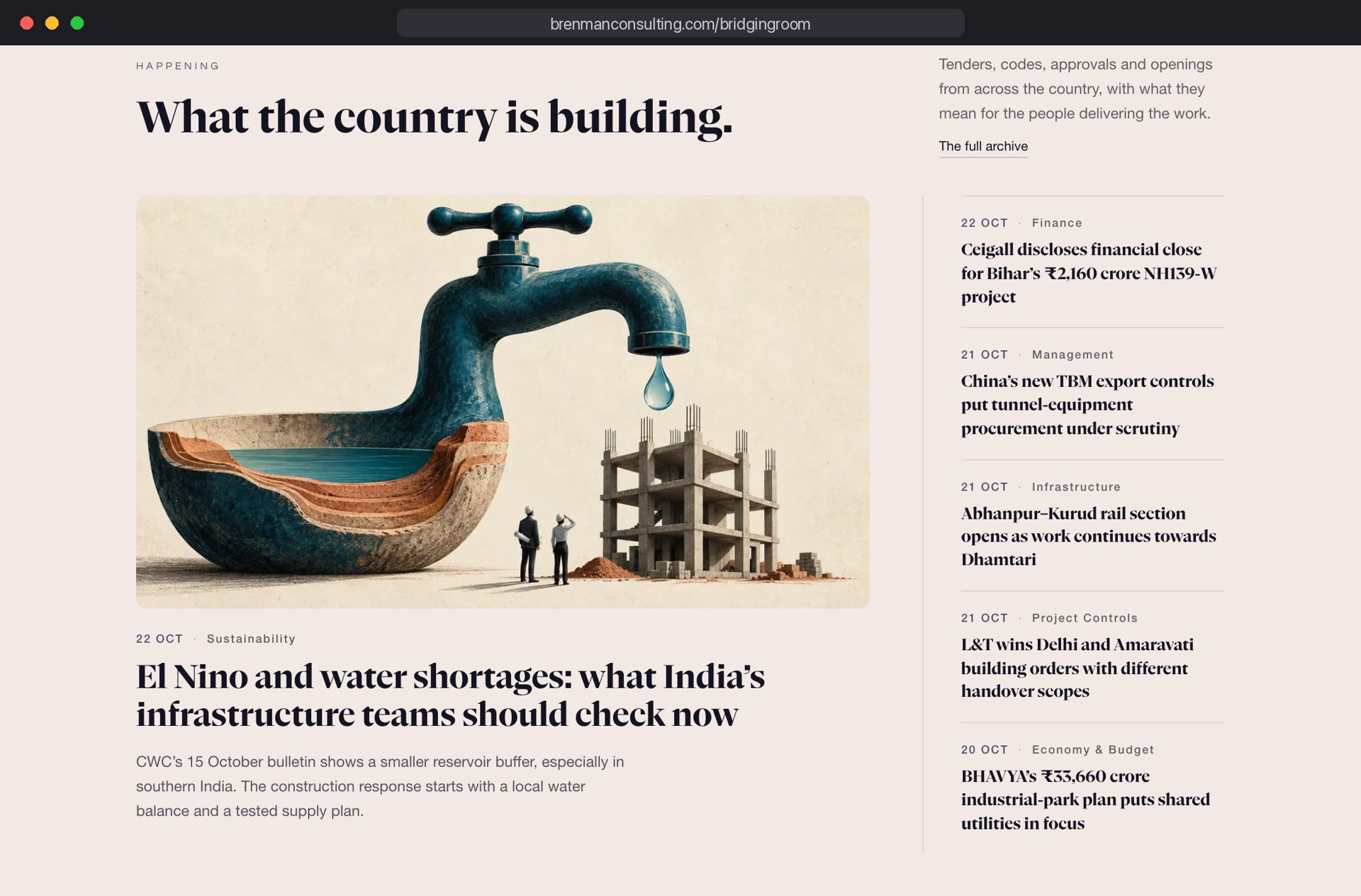
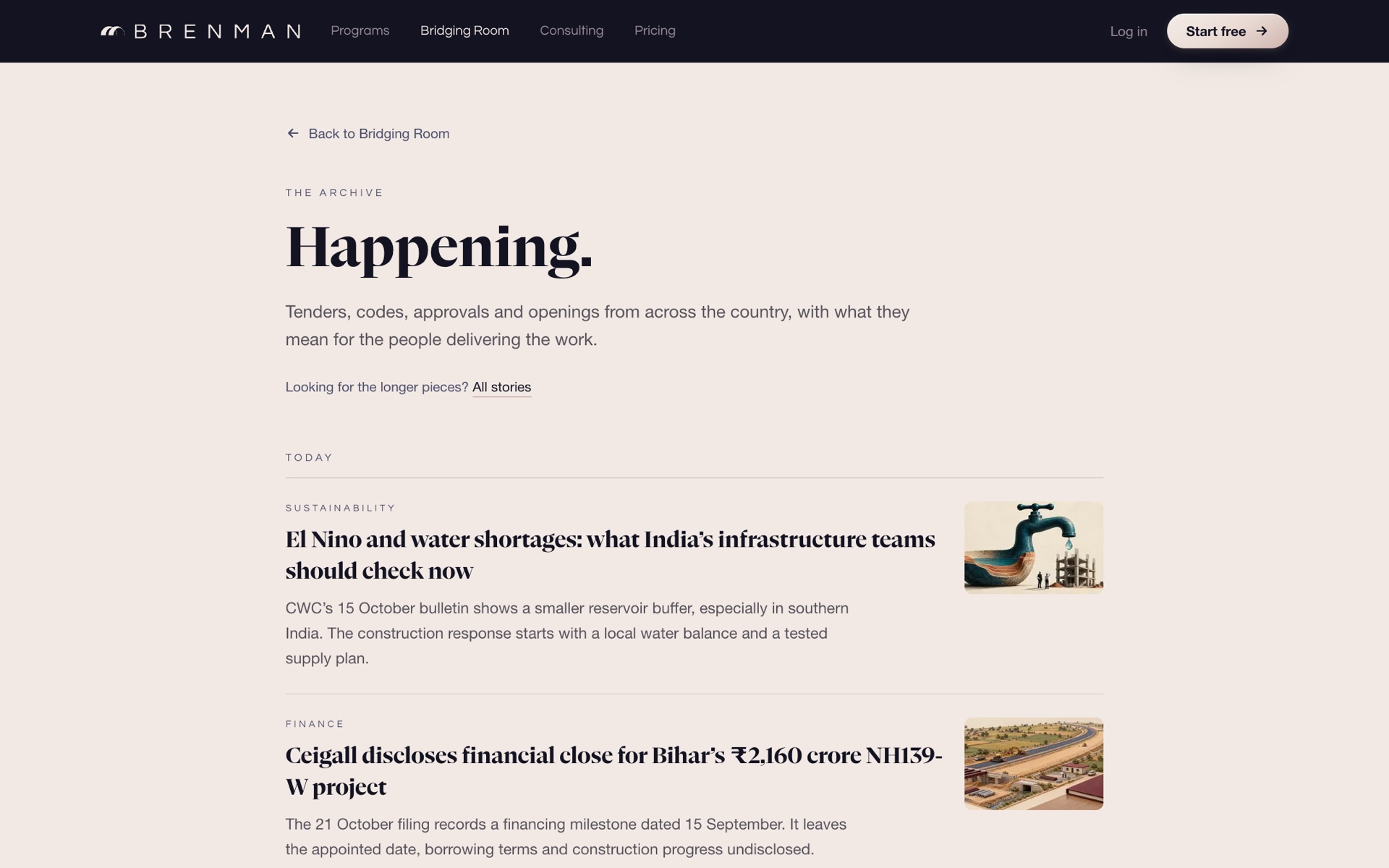
BRENMAN's editorial arm: long-form stories from practitioners, filed by category and writer, next to Happening, a news line of tenders, codes, approvals, and openings, each with a note on what it means for the people delivering the work.
Film and clips, in the same place
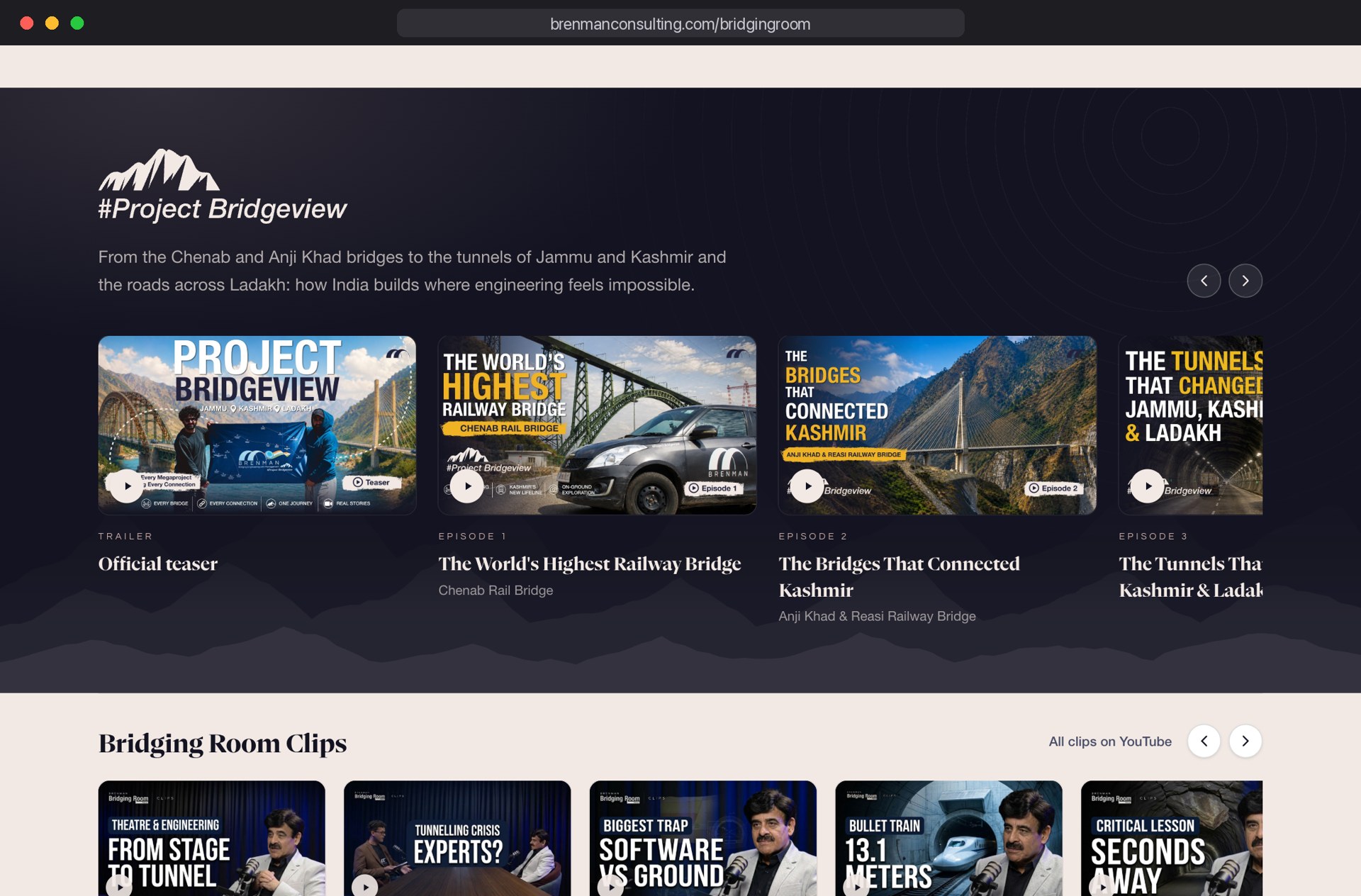
The BridgeView documentary band and a rail of Bridging Room Clips bring the podcast and films onto the site. I edit most of what plays there; the editing page shows how.
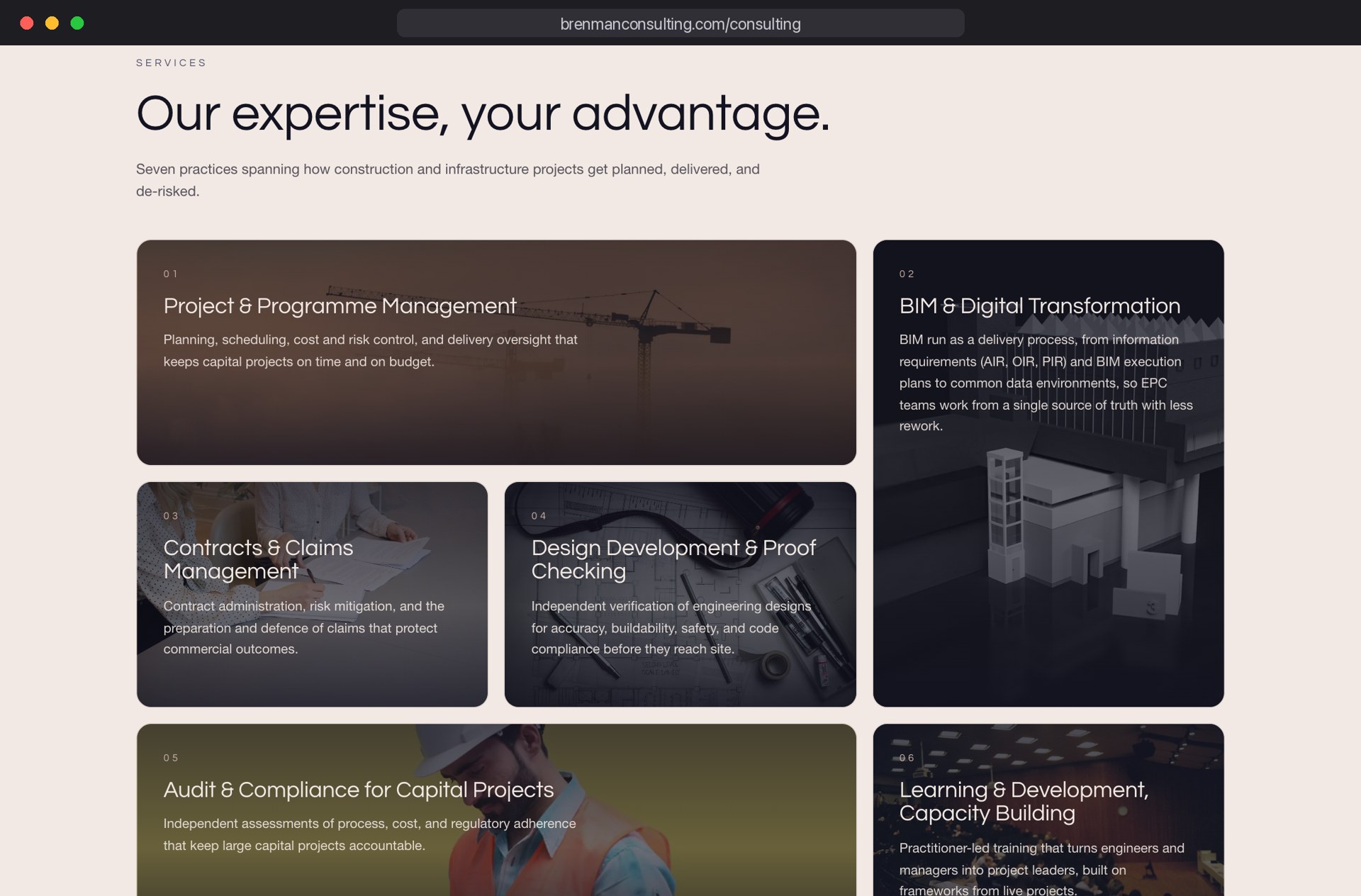
The consulting practice
The same codebase runs the firm's own site: seven consulting services, from project and programme management to independent design proof checking, with a call booking flow.
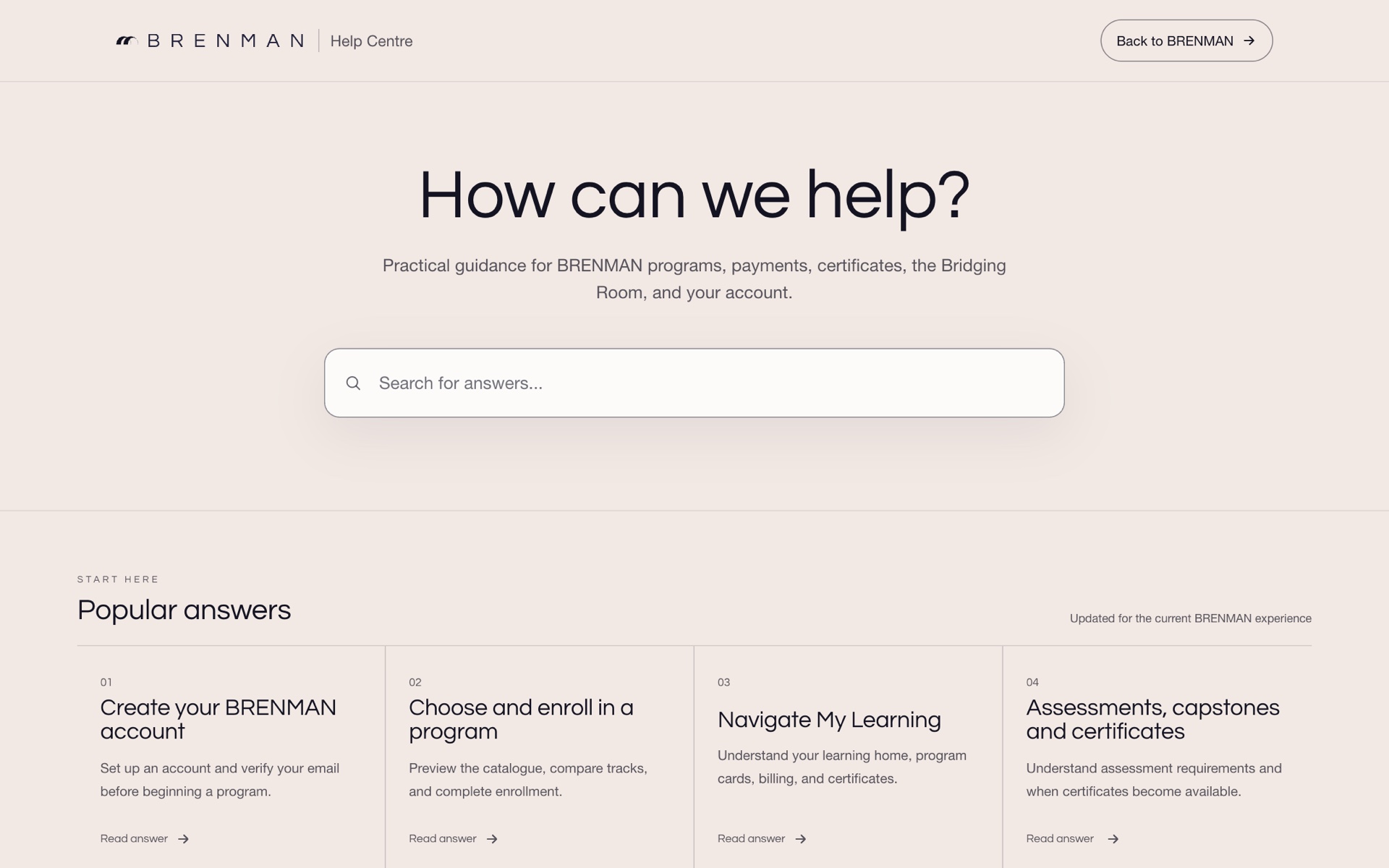
A help centre that answers before support has to
Searchable guides for accounts, enrolment, My Learning, assessments, payments, and certificates.
Built mobile-first, installable as an app
On a phone every page collapses to a single column with full-width actions, and the site installs as a Progressive Web App with no app store in between.
An admin the team runs the business from
Fifteen admin pages cover analytics, users, batch enrolment, a Tiptap content CMS, capstone and case-study review, email campaigns with open and click rates, testimonials, live stream sessions, and announcements. Six scheduled jobs send learner nudges, run the newsletter lifecycle, and email weekly reports.
Built for real payments from day one.
- Framework
- Next.js 16, React 19, TypeScript
- Interface
- Tailwind CSS v4 installable PWA
- Data
- Supabase Postgres row-level security, 99 migrations, Mumbai region
- Payments
- Razorpay orders, subscriptions, webhooks, reconciliation
- Video
- Bunny Stream signed URLs, HLS playback
- Resend transactional, campaigns, newsletter
- Content
- Tiptap CMS articles, programs, help
- Documents
- Puppeteer, jsPDF certificates, invoices, transcripts
- Reliability
- Sentry, Upstash Redis rate limiting
- Analytics
- PostHog, Vercel Analytics server-side Meta Conversions API
- Testing
- Playwright E2E CI runs lint, types, and build
- Hosting
- Vercel Mumbai region, 6 cron jobs
Eight months, one builder, a whole platform.
FusionX went from an empty repository to a paid product in 20 days, and has kept shipping since: 578 commits landed in the two months before this case study alone.
AI makes one person fast. Rules keep that person safe.
Claude Code let me design and build a platform this size alone. What made it safe to run with real money were the boring rules: development before production, verify against the live database, lock down every new table, and test checkout like a customer would.
It also let the platform keep up with the business. When BRENMAN wanted a publication, a news line, or a new program, the answer was a release, with no new vendor and no new subscription.